Ethiopia to Launch Its Third Earth Observation Satellite in 2026 with Chinese Collaboration

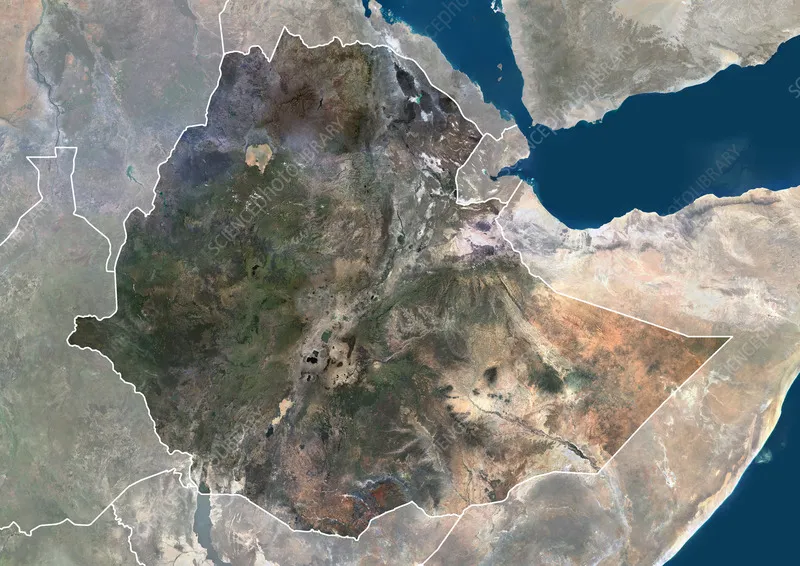
Ethiopia is making significant strides in space technology with plans to launch its third Earth observation satellite (EOS) in 2026. This project is spearheaded by the Ethiopian Space Science and Geospatial Institute (ESSGI), in partnership with China. The new satellite is expected to provide higher resolution images and enhanced monitoring capabilities compared to its predecessors.
According to Mr. Tesfaye Fufa, the Executive Director of Satellite Monitoring at ESSGI, preparations for the launch are already underway. However, he did not disclose the financial details of the collaboration between Ethiopia and China.
Ethiopia’s Progress in Space Technology
Ethiopia’s space program is relatively young, but it has made notable advancements in a short time:
- First Satellite (ETRSS-1, 2019): Launched in December 2019 with assistance from China, the Ethiopian Remote Sensing Satellite-1 (ETRSS-1) was designed for agricultural monitoring, environmental management, and climate observation.
- Second Satellite (ET-SMART-RSS, 2020): The ET-SMART-RSS was launched in December 2020 and had enhanced capabilities for remote sensing and scientific research.
- Third Satellite (Planned for 2026): The upcoming satellite will feature improved imaging technology, allowing for more precise data collection and disaster prediction.
With the launch of the third Earth observation satellite, Ethiopia aims to strengthen its capabilities in:
- Natural disaster prediction (floods, droughts, deforestation)
- Climate change monitoring
- Urban planning and infrastructure development
- Agricultural resource management
- Water resource tracking
How Ethiopia Compares to Other African Countries in Space Technology
Ethiopia is among the few African nations actively developing space programs, but other countries are ahead in terms of the number and types of satellites launched. Here’s how Ethiopia compares to some of the leading space programs in Africa:
| Country | Number of Satellites | Notable Developments | Launch Partners |
|---|---|---|---|
| Egypt | 10+ | First African country to launch a satellite (1998), owns multiple Earth observation and communication satellites | Russia, China, France |
| South Africa | 8+ | Strong private sector participation, leading in miniaturized satellite technology | USA, Russia, India |
| Nigeria | 6 | Owns communication and Earth observation satellites, supports disaster monitoring | China, UK |
| Algeria | 6 | Advanced in remote sensing, has built satellites domestically | China, Russia |
| Morocco | 2 | Launched high-resolution imaging satellites for military and civilian use | France |
| Ethiopia | 2 (3rd planned) | Expanding Earth observation capacity, early-stage program | China |
The Role of Space Technology in Africa’s Development
Many African countries are recognizing the strategic value of space technology for national development. Satellites play a crucial role in addressing challenges such as climate change, food security, and natural disaster management. Countries like Egypt, South Africa, and Nigeria have more developed space programs and have launched satellites for communications, military surveillance, and scientific research.
While Ethiopia is still in the early stages, its space ambitions are growing, especially with strong support from China. China has been a key partner for many African countries in space projects, funding and supporting satellite development to enhance scientific research and technological advancements.
What’s Next for Ethiopia?
With the launch of its third satellite in 2026, Ethiopia is positioning itself as a leader in Earth observation technology in East Africa. If Ethiopia continues on this trajectory, it could become a regional hub for satellite-based research, climate monitoring, and data analysis, benefiting sectors such as agriculture, water management, and infrastructure development.
Ethiopia’s upcoming satellite launch is a significant step in the country’s space exploration journey. While countries like Egypt, South Africa, and Nigeria have more advanced space programs, Ethiopia’s continued investment in satellite technology demonstrates its commitment to leveraging space science for national development.
With support from China and other global partners, Ethiopia’s space program is expected to grow further, offering long-term benefits in scientific research, environmental protection, and technological innovation.

About Addis Insight
Addis Insight is Ethiopia’s fastest growing digital news platform, providing consumers with the latest news from Ethiopia and its diaspora. We provide marketers with innovative opportunities to leverage our stories and overall brand with a fiercely curious and highly engaged audience.