60 Years, 6 Dams: How Salini Built Ethiopia’s Hydro Legacy

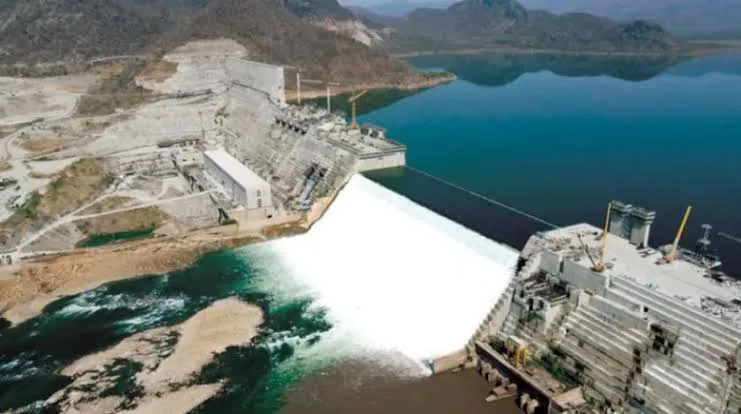
Salini’s Enduring Legacy: Six Dams That Reshaped Ethiopia’s Water and Power Landscape
Introduction: An Ethio-Italian Saga Forged in Concrete and Water
For more than sixty years, one Italian company has stood at the heart of Ethiopia’s transformation into the “Water Tower of Africa.” Salini Costruttori—today Webuild—is not merely a foreign contractor. Across four political regimes, from Emperor Haile Selassie’s monarchy to the present federal republic, the company embedded itself as Ethiopia’s indispensable engineering arm.
From Legadadi, which secured Addis Ababa’s water supply, to the Grand Ethiopian Renaissance Dam (GERD), Africa’s largest hydropower plant, Salini/Webuild’s concrete colossi have shaped Ethiopia’s economic aspirations, regional diplomacy, and domestic controversies. These dams are monuments to a national vision of progress, yet their legacy is also contested: displacing communities, altering ecosystems, and redrawing the geopolitics of the Nile Basin.
Salini/Webuild’s Major Dams in Ethiopia
Legadadi (1967–1971) — Securing Addis Ababa’s Water
- River system: Legadadi/Sendafà
- Purpose: Urban water supply (up to ~70% of Addis Ababa at inauguration)
- Design highlights: Hollow gravity concrete main dam (44 m) plus rockfill saddle dam; treatment plant; ~24–30 km steel aqueducts
- Long-run issue: Catchment agriculture drove sedimentation and nutrient loading; cyanobacteria blooms and degraded water quality—an early lesson in whole-catchment management
Gilgel Gibe I (1988–2004) — The Reservoir That Enabled a Cascade
- River system: Gilgel Gibe / Omo
- Purpose: Hydropower and regulation for downstream cascade
- Installed capacity: 184 MW
- Design highlights: ~40 m rock-fill embankment with bituminous face; ~917 Mm³ reservoir
- Strategic role: Created a stable headwater source to feed Gilgel Gibe II
Gilgel Gibe II (2003–2010) — Tunnel Power, Not a Big Dam
- River system: Gilgel Gibe / Omo
- Purpose: High-head diversion to maximize energy without another vast reservoir
- Installed capacity: 420 MW (four Pelton units)
- Design highlights: ~49 m diversion structure and a ~26 km tunnel through the Fofa mountains; ~505 m gross head
- Impact: On commissioning, lifted national generation by ~80%—a showcase of system-level planning
Gilgel Gibe III (2006–2016) — Colossus and Controversy on the Omo
- River system: Omo
- Purpose: Hydropower and flow regulation for irrigation schemes
- Installed capacity: 1,870 MW
- Design highlights: ~250 m roller-compacted concrete (RCC) gravity dam (once the world’s tallest RCC)
- Controversies:
- No-bid award near US$2bn; ESIA published after construction began
- Elimination of the Omo’s natural annual flood undermined flood-recession farming and grazing, affecting ~200,000 indigenous people
- Forced resettlement linked to state sugar estates; rights abuses documented
- Downstream risk to Lake Turkana’s ecology, escalating cross-border concern
Koysha (2016–present) — Ambition Meets Fiscal Gravity
- River system: Omo (fourth in the cascade)
- Purpose: Hydropower
- Planned capacity: 2,160 MW (eight Francis units)
- Design highlights: ~180 m RCC gravity dam
- Status & strain: ~60–65% complete; severe cost overrun (~151%) and FX constraints pushed Ethiopia toward exceptional commercial borrowing—stress-testing the debt-fueled model
GERD (2011–present) — Africa’s Largest Hydropower Project
- River system: Blue Nile (Abay)
- Purpose: Hydropower, national grid stabilization, potential regional exports
- Installed capacity (design): 5,150 MW from 13 turbines
- Design highlights: ~170 m RCC main dam (≈1.8 km long) plus long rockfill saddle dam; ~74 bcm reservoir
- Financing identity: Largely domestically financed—bonds, diaspora contributions, salary deductions; Commercial Bank of Ethiopia shouldered the bulk—cementing its status as a sovereignty project
The GERD’s Political Economy and Execution
Sovereignty by Design
Launched in April 2011 during Egypt’s political upheaval, GERD publicly rejected the logic of colonial-era Nile treaties. Refusal by multilateral lenders catalyzed a domestic financing drive that transformed GERD into a mass-mobilization project—part infrastructure, part nation-building.
Civil Works vs. Electromechanical Reality
Salini/Webuild led the civil works; Ethiopia’s state-owned METEC handled turbines and steelworks. Chronic delays, quality issues, and alleged graft led to METEC’s termination in 2018 and high-profile arrests—illustrating how governance failures can bog down even well-executed civil engineering.
Economic Payoffs and Practical Bottlenecks
The Energy Engine Ethiopia Wants
Hydropower is the backbone of Ethiopia’s industrial strategy: lower-cost, renewable electricity to power manufacturing, expand access for 120+ million people, and export to neighbors through high-voltage interconnectors.
The Frictions Holding It Back
- Transmission constraints: Grid upgrades and cross-border interconnectors lag megaproject timelines, slowing export revenues.
- Debt pressure: Cost overruns (notably Koysha) and foreign exchange scarcity complicate project completion and operations.
- Operational risks: Sedimentation from highland erosion threatens reservoir lifespans; climate variability may alter inflows and generation profiles.
Human and Environmental Costs
Omo Basin: Development Without the Flood
Gibe III ended the Omo’s natural flood pulse. The result: collapse of flood-retreat agriculture and pasture cycles; food insecurity and displacement among indigenous communities; heightened conflict over shrinking resources; and transboundary ecological risk focused on Lake Turkana.
GERD: Fewer Local Displacements, Bigger Geopolitics
While GERD avoided the Lower Omo’s displacement patterns, it ignited a decade of geopolitical friction with Egypt and Sudan, transforming a civil engineering project into Africa’s most consequential water-security dispute.
The GERD Negotiations—Milestones Without a Binding Deal
2011 — Announcement and Ground-Breaking
Ethiopia begins construction without prior basin-wide agreement, reframing the Nile status quo.
2012 — Tripartite International Panel of Experts
Technical reviews establish a basis for dialogue but not a roadmap for operations.
2015 — Declaration of Principles (Khartoum)
Egypt, Ethiopia, and Sudan endorse cooperation, equitable use, and no significant harm—but leave rules for drought and long-term operations unresolved.
2019–Feb 2020 — U.S./World Bank Observers
Talks intensify; Ethiopia exits final meetings, citing sovereignty and bias concerns.
July 2020 — First Filling
Ethiopia commences filling unilaterally; the dispute reaches the UN Security Council before returning to African Union mediation.
2020–2025 — AU Rounds and Repeated Deadlocks
Multiple AU-facilitated efforts fail to yield a binding filling/operation agreement; de facto realities on the ground outpace diplomacy.
What Endures: Webuild’s Dual Legacy in Ethiopia
Monumental Achievements
- A six-project arc culminating in Africa’s largest hydropower plant
- System-level design (Gibe I + II) that squeezed megawatts from topography rather than more concrete
- A durable construction partnership across wildly different Ethiopian governments
Inescapable Costs
- Omo basin dispossession and ecological disruption
- Debt and FX vulnerabilities, with Koysha emblematic of the financing squeeze
- Geopolitics of the Nile, still unresolved and highly consequential
The Road Ahead
Sustaining this legacy demands:
- Catchment rehabilitation to slow sedimentation (reforestation, terracing, watershed governance)
- Grid and interconnector investment to monetize surplus power and stabilize the system
- Climate-smart operations (adaptive rule curves, regional coordination)
- Credible, inclusive diplomacy to turn GERD from flashpoint into anchor of basin cooperation
Conclusion: Concrete That Still Moves
Salini/Webuild helped engineer a new Ethiopian reality. Its dams are not static monuments; they are active forces—spinning turbines, redirecting rivers, shifting livelihoods, and recalibrating regional power. The legacy is both nation-building and nation-testing. Whether it ultimately reads as triumph or cautionary tale will depend less on concrete already poured than on governance, diplomacy, ecology, and finance in the years ahead.

About Addis Insight
Addis Insight is Ethiopia’s fastest growing digital news platform, providing consumers with the latest news from Ethiopia and its diaspora. We provide marketers with innovative opportunities to leverage our stories and overall brand with a fiercely curious and highly engaged audience.