The Great Escape: Why Black American Families Are Trading the “American Dream” for Ethiopia’s “Soft Life”

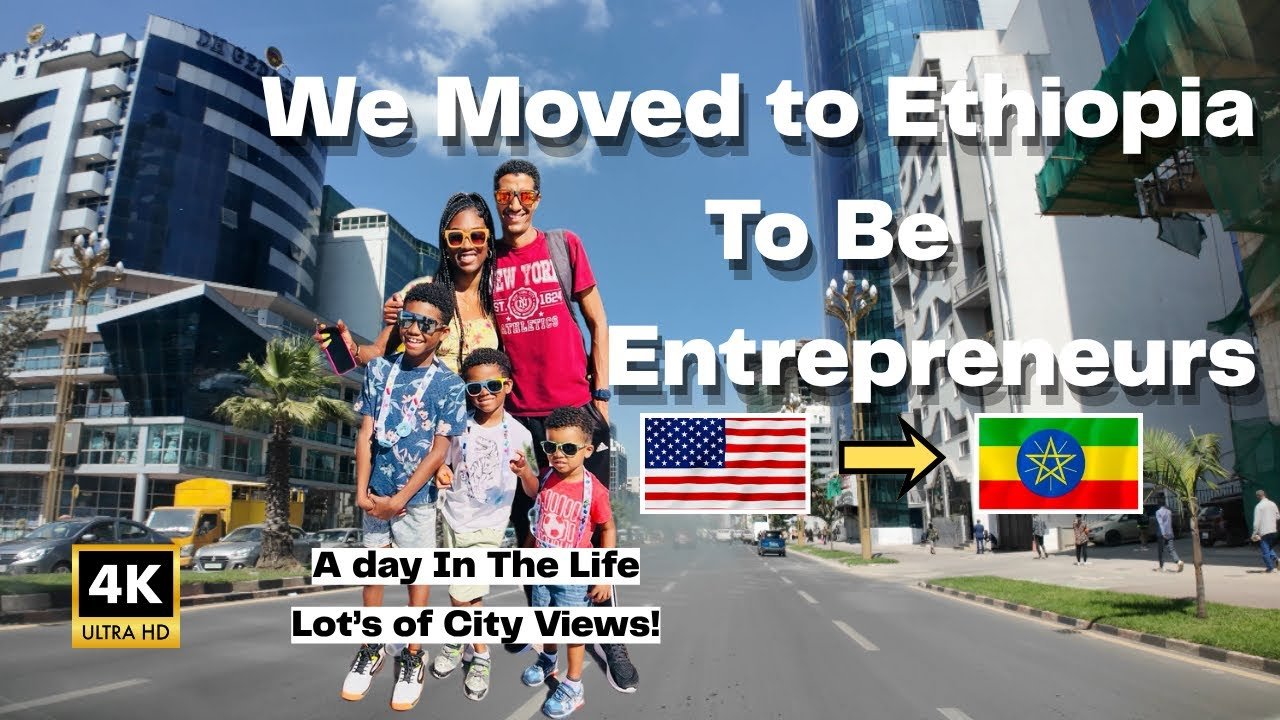
The narrative of the “American Dream” has traditionally been one of ascent: if you work hard enough, you will achieve prosperity, security, and happiness. But for a growing cohort of African Americans, that ascent feels more like a treadmill—a relentless cycle of high costs, systemic fatigue, and burnout.
A quiet but determined migration, often termed “Blaxit,” is seeing Black professionals trade their US passports for residency in Africa. Among the destinations, Ethiopia—the only African nation never colonized—stands out as a beacon of pride and opportunity.
Through the lens of three families—The Manurvs (Atlanta educators), Princess & Rossi (high-earning entrepreneurs), and The Andrews (Brooklyn teachers)—a compelling pattern emerges. They didn’t just move for money; they moved to reclaim their time, their health, and their peace.
1. The Push: Escaping the “Golden Handcuffs” and the Hamster Wheel
The driving force behind this migration isn’t poverty in the traditional sense; it is a “poverty of time” and a ceiling on quality of life, regardless of income.
- The “Comfortable Cage”: Princess and Rossi represent the upper echelon of Black American success. With a household income over $200,000, a large home in the DC area, and luxury cars, they had “made it.” Yet, Princess describes their life as a “comfortable cage.” They were shackled to a lifestyle that required constant labor to maintain. “We were running on a hamster wheel,” Rossi explains. “You think you’re going somewhere, but you’re just at the same place.”
- Survival Mode: For Ian and Jocelyn Manurv in Atlanta, the struggle was more visceral. Despite having master’s degrees, they were “working to live, not living to work.” After paying $2,100 in basic living expenses, they had nothing left. The stress was so high they occasionally relied on food pantries. Ian admits he was a “workaholic” who barely saw his children because he was too exhausted from working multiple jobs.
- The Grind: Afia and Daniel Andrews in Brooklyn were living a life of ships passing in the night. Holding down three jobs, including overnight shifts, meant they sometimes went entire weekends without seeing each other. The stress manifested physically for Afia, who felt she was running toward “sanity and better health” by leaving.
2. The Pull: The Mathematics of the “Soft Life”
In Ethiopia, these families found that the US dollar holds a power that borders on alchemy. The “Soft Life”—a term popular in Black culture referring to a life of ease and low stress—became mathematically possible.
- The Rent Revolution:
- The Manurvs & The Andrews: Both couples work for international schools that provide housing. They went from paying thousands in rent/mortgages in the US to paying $0 in rent in Addis Ababa. The Andrews now live in a brand-new building with a balcony overlooking the Entoto Mountains.
- Princess & Rossi: They traded a mortgage of over $3,000 in the US for a spacious home in Addis that rents for approximately $400 a month. As Rossi notes, one month of US housing costs covers an entire year of living expenses in Ethiopia.
- Lifestyle Inflation (The Good Kind):
- Luxury as Standard: In Brooklyn, a massage or a housekeeper was a rare luxury. In Addis, the Andrews have a housekeeper who cooks and cleans, and Afia gets weekly massages.
- Dining & Entertainment: Afia notes that a cocktail in New York cost $16; in Addis, it’s $3. They can dine out, travel to Zanzibar or Dubai, and enjoy their weekends without financial guilt.
- Savings: The Manurvs are now saving $4,000 a month, a financial feat Ian calls “unheard of” in their previous life.
3. Identity and Peace: “Africa for the Africans”
For Black Americans, the move is often a spiritual repatriation. The low-level background radiation of racial anxiety present in the US is replaced by a sense of belonging.
- Safety and Community: In Atlanta, the Manurvs worried about crime and “shady activity” near their home. In Addis, Ian describes a profound shift: “The safety that you feel here being Black and on this continent is totally different.” The community is tight-knit; neighbors visit when you are sick, and the “coffee ceremony” forces people to slow down and connect.
- Representation for the Next Generation: Jocelyn Manurv emphasizes the power of optics. Her children now live in a world where Black people hold every position of power—from the Prime Minister to the pilots to the shopkeepers. There is no “glass ceiling” on their identity.
- The Spiritual Connection: For Afia Andrews, who changed her name to honor her heritage, the move was almost prophetic. “I never felt like I belonged in the United States… Africa is for the Africans,” she says. She describes the joy of being greeted as “sister” by strangers and the pride of living in a country that successfully resisted colonization.
4. The “Blue Ocean” Economy
While retirees often look abroad, Ethiopia is attracting builders. The US economy is viewed as hyper-competitive and saturated, while Ethiopia is seen as a land of gaps waiting to be filled.
- The Final Frontier: Rossi argues that “Africa is the final frontier.” When they lived in the US, they couldn’t find high-quality video marketing for Ethiopian real estate. Instead of complaining, they moved to Addis and started a marketing company.
- Market Dominance: Princess notes she might be the “first American to own a marketing company” in her niche in Ethiopia. To achieve that level of market penetration in the US would require millions of dollars and decades of work; in Ethiopia, it required vision and the courage to move.
5. The Reality Check: Adjusting to a Developing Nation
All three families are careful to dismantle the “Wakanda” myth. Moving to a developing nation requires a shedding of American conveniences and expectations.
- Infrastructure Shocks: The Andrews describe the reality of power outages that take out the lights, Wi-Fi, and water all at once. They had to learn to live without central heating (using space heaters instead) and adapt to a lack of Amazon delivery.
- Culinary Adjustments: “There is no McDonald’s… let it go,” Afia jokes. They had to learn to make their own almond milk and import specific cereals because American processed conveniences simply don’t exist.
- Cultural Friction: The Manurvs struggled initially with the language barrier (Amharic) and the jarring noise of religious broadcasts at night. Princess also touched on the nuances of privilege, noting that despite being Black, she sometimes saw locals prioritize white expats, a lingering complexity of global racial dynamics.
- Patience is Currency: Rossi warns that the “microwave culture” of the US—where we want everything now—does not work in Ethiopia. Things move slowly. Bureaucracy is heavy. Patience is a survival skill.
The Verdict: “You Are Not a Tree”
Despite the challenges, the consensus among these families is unanimous: the trade-off is worth it. They have exchanged stress, debt, and racial fatigue for abundance, time, and legacy.
Their advice to others is urgent.
“Five years ago… I would say put down the McDonald’s, put down the game controller, open Google… and just do it,” Daniel Andrews says.
Jocelyn Manurv offers a practical reminder to those paralyzed by fear: “You are not a tree. If you don’t like it, just go back.”
For these families, the “American Dream” is no longer in America. It is found in the autonomy, safety, and community of the Ethiopian highlands.

About Addis Insight
Addis Insight is Ethiopia’s fastest growing digital news platform, providing consumers with the latest news from Ethiopia and its diaspora. We provide marketers with innovative opportunities to leverage our stories and overall brand with a fiercely curious and highly engaged audience.