This Ethiopian EdTech Startup Went Offline-First—and Enrolled Half of the Country’s Freshman Students

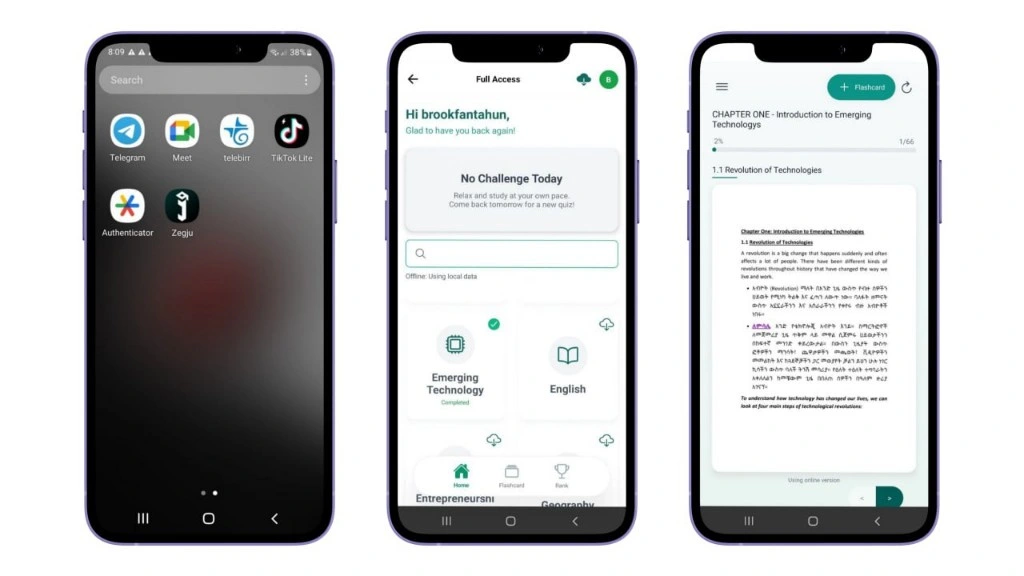
When the team behind Zegju first launched their platform, it followed a common edtech pattern: a web-based learning service built around notes, exercises, and exam preparation. But student feedback quickly exposed a structural flaw. The platform worked only as long as students had reliable internet access—something far from guaranteed for much of Ethiopia’s student population.
This year, Zegju made a decisive pivot.
The company shut down its web service and rebuilt the product as a mobile application designed around offline-first access, a move that has since reshaped both its reach and its scale.
According to a recent public update by co-founder Brook Fantahun, the shift has coincided with a major adoption milestone: Zegju has enrolled approximately 15,000 first-year university students—around 50 percent of Ethiopia’s entire freshman cohort for the current academic year.
“We’ve now finished a whole app for freshman students with flashcards, notes, and previous exams and enrolled 15k freshman students, which is around 50% of all freshmen this year,” Fantahun wrote in a LinkedIn post published last week.
From Web Platform to Offline-First App
The pivot was not incremental. Zegju discontinued its website entirely and relaunched as a mobile app built to function with little or no connectivity. The app allows students to access essential learning resources offline, including:
- Course notes with Amharic and English explanations
- Chapter-aligned exercises
- Collections of previous midterm and final exam papers from multiple universities
For first-year students—many of whom are adjusting simultaneously to academic pressure, new cities, and financial constraints—the ability to study without continuous internet access proved critical.
The offline design also reflects lessons learned earlier. During the previous academic cycle, Zegju supported over 8,000 students preparing to join Addis Ababa University, giving the team early insight into where students struggled most and how digital tools could either help—or exclude—them.
Capturing the Freshman Cohort
Zegju’s strongest growth this year came from newly admitted university students. By focusing its feature set on first-year courses and foundational content, the platform positioned itself as an entry-point tool rather than a supplementary resource.
That strategy appears to have paid off. Enrolling roughly half of the national freshman intake places Zegju in a rare position within Ethiopia’s edtech ecosystem—achieving scale not through institutional partnerships, but through direct student adoption.
First-year students are also a strategically important segment. Study habits formed in the first semester often persist throughout university life, giving platforms that engage students early a long-term retention advantage.
Gamifying Consistency, Not Just Performance
Beyond access, Zegju also focused on sustaining daily engagement. The app introduced daily challenges, short quizzes consisting of 15 questions pulled from common university courses and rotated throughout the week.
To reinforce participation, Zegju layered in competitive mechanics:
- Daily, weekly, and all-time leaderboards
- Public rankings among peers
- A weekly cash reward of 1,000 ETB for top performers
The goal, according to the team, is not only competition but routine—encouraging students to engage with material daily rather than only during exam periods.
Personalized Learning Through Flashcards
Another feature gaining traction is Zegju’s customizable flashcard system. Students can create their own flashcards covering formulas, definitions, and key concepts, and review them offline at any time.
Unlike rigid content libraries, the flashcard tool allows students to write in any language, reflecting how many Ethiopian students naturally process academic material across linguistic boundaries. The design supports active recall and spaced repetition, turning the app into a personalized study system rather than a fixed syllabus.
What’s Next
Zegju plans to roll out video tutorials by the end of the current semester, expanding into guided and visual explanations while maintaining its offline-first philosophy.
For now, the company’s momentum underscores a broader point about edtech in emerging markets: scale often comes not from advanced features, but from understanding constraints—and designing around them.
In a landscape crowded with platforms built for always-online users, Zegju’s rise suggests that context-aware design, early-stage focus, and direct student adoption may be the most effective growth strategy of all.

About Addis Insight
Addis Insight is Ethiopia’s fastest growing digital news platform, providing consumers with the latest news from Ethiopia and its diaspora. We provide marketers with innovative opportunities to leverage our stories and overall brand with a fiercely curious and highly engaged audience.