The Winners and Losers of Content Diplomacy: Inside IShowSpeed’s Africa Tour

The Digital Frontier of Content Diplomacy: A Comprehensive Analysis of the IShowSpeed Africa Tour (2025–2026)
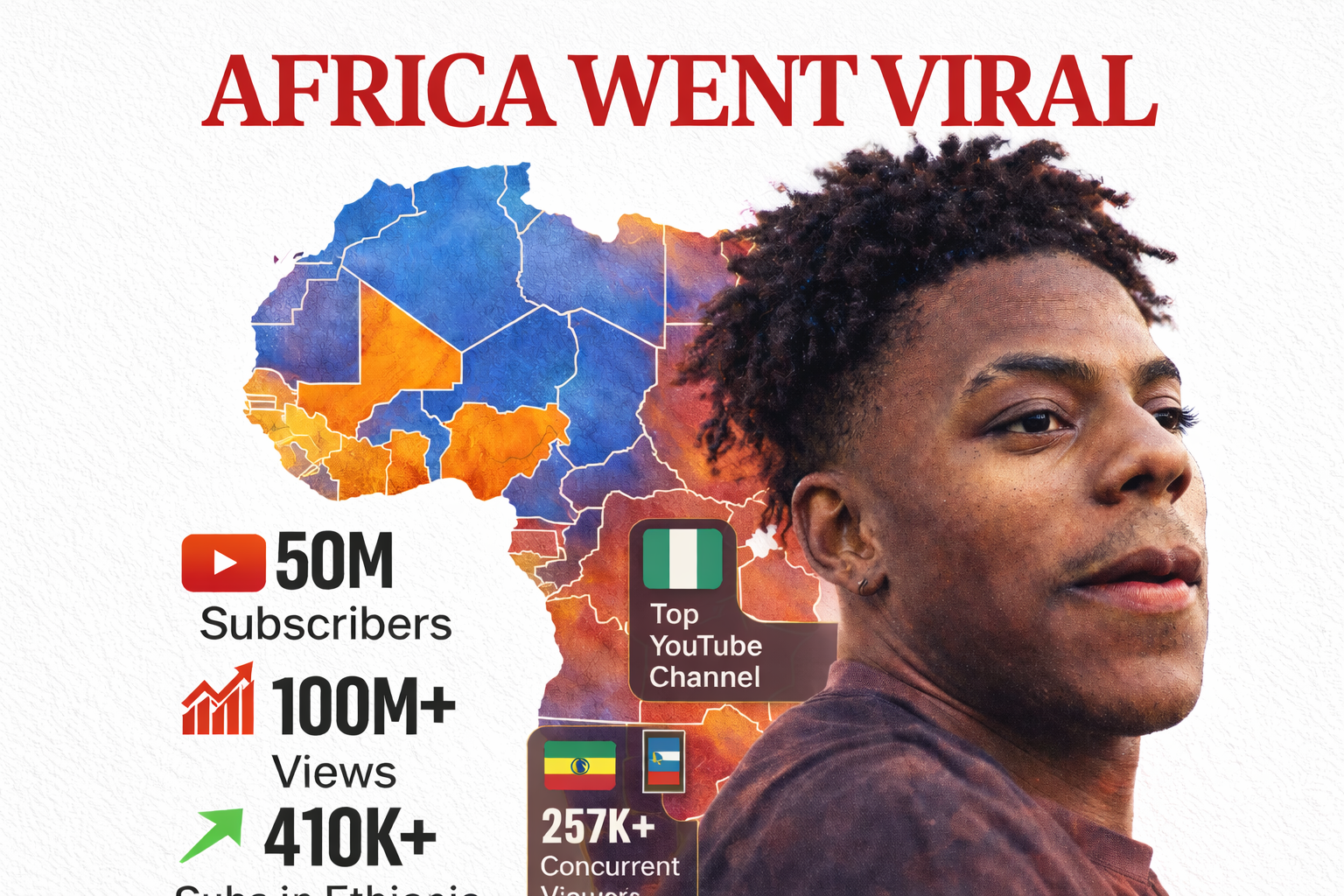
The “Speed Does Africa” tour, conducted between December 2025 and January 2026, represents a transformative moment in the evolution of digital media, real-life (IRL) streaming, and the global perception of the African continent. Led by Darren Jason Watkins Jr., known professionally as IShowSpeed, the 28-day itinerary spanned 20 nations, moving from the southern tip of the continent through the East African highlands, across the North African coastline, and concluding in the vibrant cultural hubs of West Africa. This journey was not merely a series of travel broadcasts but a high-stakes experiment in “attention arbitrage”—the mobilization of massive global digital audiences to disrupt long-standing cultural narratives. By blending high-octane entertainment with unfiltered explorations of modern African urbanity, the tour achieved unprecedented engagement metrics, including record-breaking concurrent viewership and a historic milestone of 50 million subscribers reached in the heart of Lagos, Nigeria.
The tour arrived at a critical juncture where the digital divide is narrowing, yet the “perception gap” regarding Africa remains vast. For decades, Western media has frequently reduced the continent to a monolith of poverty, conflict, or exotic safaris. The analysis of the “Speed Does Africa” engagement data suggests a “perception reset” occurred in real-time. As millions of young viewers in the West watched high-speed internet streams from modern skyscrapers in Addis Ababa, luxury malls in Lagos, and pristine beaches in Mozambique, the “mud hut” stereotype was systematically dismantled for a new generation of digital natives. However, this disruption was not without its frictions. The tour also revealed deep-seated regional tensions, security vulnerabilities, and the complex politics of “Blackness” as it moves across Sub-Saharan and North African borders.
Quantitative Breakdown of Digital Engagement
The success of the “Speed Does Africa” tour is best understood through its quantitative dominance across streaming platforms. The performance metrics across the 20-country itinerary highlight the peak concurrent viewership and subscriber growth that defined the journey.
| Country | Date (2025-2026) | Peak Concurrent Viewers | Subs Gained (Single Day) | Total Stream Views (24h) |
| Angola | Dec 29 | 150,000+ | 100,000 | 4.5M |
| South Africa | Dec 31 – Jan 2 | 200,000+ | 200,000 | 7.2M |
| Botswana | Jan 3 | 160,000+ | 100,000 | 3.8M |
| Zimbabwe | Jan 5 | 140,000+ | 80,000 | 4.1M |
| Zambia | Jan 6 | 135,000+ | 100,000 | 3.5M |
| Mozambique | Jan 7 | 130,000+ | 100,000 | 3.2M |
| Eswatini | Jan 8 | 155,000+ | 100,000 | 3.9M |
| Rwanda | Jan 9 | 120,000+ | 100,000 | 3.0M |
| Kenya | Jan 10 – 12 | 240,000+ | 360,000 | 8.5M |
| Ethiopia | Jan 13 | 257,000+ (Record) | 410,000 (Record) | 9.9M (Record) |
| Egypt | Jan 16 | 210,000+ | 300,000 | 6.8M |
| Algeria | Jan 17 | 200,000+ | ~500,000 (Hit 49M) | 6.2M |
| Morocco | Jan 18 | 180,000+ | 150,000 | 15M (AFCON Replays) |
| Senegal | Jan 19 | 140,000+ | 200,000 | 4.4M |
| Nigeria | Jan 20 – 22 | 250,000+ | ~300,000 (Hit 50M) | 8.1M |
| Ghana | Jan 23 | 165,000+ | 100,000 | 5.2M |
| Liberia | Jan 24 | 135,000+ | 100,000 | 3.7M |
| Ivory Coast | Jan 25 | 110,000+ | 100,000 | 2.8M |
| Benin | Jan 26 | 115,000+ | 100,000 | 2.5M |
| Namibia | Jan 27 | 120,000+ | 100,000 | 3.1M |
The data indicates a clear trajectory of escalating interest, peaking during the East African and Nigerian legs of the tour. Ethiopia stands out as the statistical anomaly, where the stream achieved a peak concurrent viewership of approximately 257,000 and fueled a single-day subscriber spike of 410,000—the largest in the tour’s history. This surge was driven by an intense digital rivalry between Nairobi and Addis Ababa, as fans in both cities vied for global attention. The cumulative impact of these numbers is significant: the tour generated over 120 million views on YouTube alone, fundamentally shifting the platform’s algorithm toward African-centric content.
Major Milestones and Historic Achievements
The primary milestone of the tour was the crossing of the 50 million subscriber threshold on January 21, 2026, in Lagos, Nigeria. This achievement occurred on Watkins’ 21st birthday, adding a layer of personal branding that resonated deeply with his “Gen Z” and “Gen Alpha” audience. Notably, this made Watkins the first individual Black creator to reach 50 million subscribers on YouTube, a fact that highlights the increasing diversification of the platform’s upper echelons. The celebration, which took place atop a vehicle in a Lagos traffic jam, epitomized the “chaos energy” that fueled the tour’s viral success.
Beyond individual subscriber counts, the tour achieved several structural milestones in the creator economy. It was one of the most ambitious uses of travel technology to date, with the tour being sponsored by Expedia and utilizing mobile media systems that included satellite internet—though notably not Starlink in certain territories like Namibia—to maintain high-quality streams in remote locations. The “Speed Does Africa” series proved that long-form, unscripted content—sometimes lasting up to nine hours—can command the attention spans of an audience often accused of having none.
The tour’s arrival in North Africa revealed a different set of milestones. In Morocco, Watkins’ participation as the mascot “Assad” during the Africa Cup of Nations (AFCON) final represented a merging of elite sport and digital influencer culture. The reveal, where Watkins removed the mascot head in front of tens of thousands of fans, went viral across TikTok, Instagram, and Reddit, illustrating how major sporting events are increasingly embracing internet personalities to reach younger, global audiences.
Regional Analysis Phase I: Southern Africa and the Genesis of the Journey
The tour commenced in Angola on December 29, 2025, where Watkins first revealed his ancestral ties to the continent, stating his DNA results indicated Angolan heritage. This immediately reframed the tour from a tourist excursion to a “homecoming” narrative. In South Africa, the engagement lasted three days—the longest stay in any single country—focusing on the “spinning” car culture in Johannesburg with local champion Sam Sam. South Africa’s sophisticated infrastructure and vibrant youth culture provided a smooth entry point for the tour, with Watkins expressing a deep reluctance to leave the country.
In Botswana, the tour took a more educational turn. While the livestream format usually prioritizes reactions, the visit to the diamond mines gave “immediacy” to complex geopolitical issues. Viewers watched as Watkins held stones worth millions, prompting real-time discussions in the chat about the asymmetric nature of global resource extraction. This demonstrated the potential for IRL streaming to serve as a pedagogical tool, making abstract economic concepts tangible for a global youth audience.
Zimbabwe and Zambia further solidified the tour’s focus on adventure and wildlife. In Zambia, Watkins engaged in nighttime excursions, famously using a flashlight to ward off a hippopotamus, a moment that quickly became a viral clip. However, the Zimbabwe stop was marred by criticism from local influencers who felt snubbed by Watkins’ refusal to collaborate with established local personalities. This friction highlighted a core tension of the tour: Watkins’ preference for “spontaneous and unscheduled” interactions with everyday people over scripted engagements with the local elite.
Regional Analysis Phase II: East African Hegemony and the Engagement War
The East African leg, specifically Kenya and Ethiopia, functioned as a digital “Super-Bowl” for the tour. Kenya’s visit was marked by high-level government engagement, with President William Ruto personally welcoming Watkins to “Magical Kenya”. The visit to Upper Hill High School and the Maasai villages showcased a blend of modern educational infrastructure and traditional heritage. However, the real story was the “War of Numbers.” After Kenya set a high bar with 240,000 concurrent viewers and 360,000 new subscribers, the Ethiopian audience launched a massive online campaign to surpass it.
The Ethiopia stream on January 13, 2026, rewrote the history of African streaming. The 257,000 peak concurrent viewers were supported by a meticulously planned itinerary involving the several teams, which had been preparing for two months. By showcasing the “Land of Origins” through raw meat tastings (tire siga), traditional Eskista dances, and a chaotic tour of the Mercato—one of Africa’s largest open-air markets—Ethiopia secured its position as the tour’s statistical champion.
The rivalry between Nairobi and Addis Ababa dominated platforms like TikTok and X for days, reflecting a healthy, modern competition between African capitals for global attention. For Ethiopia’s tourism and hospitality sector, the numbers represented visibility that traditional marketing budgets could not buy, leading to a spike in search traffic for Ethiopian destinations on Google Trends. However, some local critics in Ethiopia felt conflicted, noting that the stream prioritized industrialized areas and famous figures over the reality of the majority of citizens, suggesting the tour was more of a “PR and diplomatic win” than a full representation of the country.
Regional Analysis Phase III: The North African Friction
The North African leg presented the most significant challenges and criticisms of the tour. In Egypt, the experience was defined by “permits and pressure,” with the stream inside the Great Pyramid being the first of its kind but also heavily restricted by security forces. The arrival in Algeria, however, marked the tour’s lowest point in terms of sentiment. Inside a football stadium, Watkins was met with hostility from “ultras” who threw water bottles and other objects at him.
While local commentators argued the hostility was a reaction to Watkins’ filming in a society sensitive to surveillance, many observers and culture critics pointed to deeper issues of racism and colorism in North Africa. This contrasted sharply with the “ease and acceptance” Watkins experienced in Sub-Saharan Africa, revealing the “older hierarchies and unresolved anxieties” that persist regarding Blackness in the Maghreb.
The difference in reception between Sub-Saharan and North Africa revealed less about Watkins than about how race, power, and belonging operate unevenly across the continent. In the south and east, “Blackness moved with ease,” whereas in the north, it passed through older social structures that were sometimes less welcoming. Despite this, Morocco provided a redemption moment when Watkins appeared at the AFCON final, a viral stunt that integrated internet culture into one of the continent’s most prestigious sporting events.
Regional Analysis Phase IV: The West African Homecoming
The West African leg was the emotional and celebratory climax of the journey. Nigeria served as the venue for the 50 million subscriber milestone, characterized by the raw, unscripted chaos of Lagos. Watkins visited the Balogun Market, Freedom Park, and the Nike Art Gallery, attempting to sample Nigeria’s famous jollof rice and interacting with local creators like the AI girl “Jarvis”. The Nigerian leg was a masterclass in “chaos energy,” as Watkins stood on top of a car in traffic to celebrate his milestone, surrounded by fans who treated him with familial affection.
In Ghana, the tour took on a more “official” homecoming tone. Organized by the premier African creator Wode Maya and a team of local collaborators, the Ghana leg included a naming ceremony where Watkins was dubbed “Barima Kofi Akuffo” by the King of the Akuapem Traditional Area. The name “Barima” signifies a brave or royal man, “Kofi” denotes a Friday-born male, and “Akuffo” connects him to the royal lineage of the Akuapem people. This segment was praised for its professional execution and its ability to showcase Ghana’s cultural depth, including visits to the Shea Butter Museum and Asenema Waterfall.
The tour concluded in Namibia on January 27, 2026. Namibia was originally scheduled as the second stop, but aviation permit issues forced a postponement to the end of the tour. Watkins visited the Nimba tribe and reflected on the trip as a “life-changing” experience that opened his eyes to a side of Africa he had never seen before. The finality of the Namibia stop provided a moment of quiet reflection compared to the high-energy crowds of Nigeria and Ghana, allowing Watkins to express a sense of reconnection to his roots.
Major Incidents and Security Analysis
The “Speed Does Africa” tour was a logistical challenge that tested the limits of creator safety in real-world environments. The unpredictability of Watkins’ brand often conflicted with the need for rigid security protocols in densely populated urban areas.
| Incident | Location | Description | Outcome |
| Stadium Hostility | Algeria | Fans threw water and objects at Watkins during a football match. | Watkins left the stadium; sparked debates on North African racism. |
| On-Camera Attack | Ivory Coast | A man attacked Watkins while he was performing a local dance in Abidjan. | Security intervened; Watkins was unharmed but shaken. |
| Security Vehicle Crash | Senegal | A truck carrying Watkins clipped a parked car, slamming two bodyguards into the vehicle. | No serious injuries reported; highlighted urban logistical dangers. |
| Crowd Control Failure | Liberia | Massive crowds in Monrovia overwhelmed security, forcing the cancellation of a football match. | Public safety concerns prioritized; shifted focus to street interactions. |
| Health Complications | Ethiopia | Watkins experienced physical distress after consuming raw meat and Maasai milk. | Viral memes; highlighted the risks of extreme cultural immersion. |
The incident in Senegal, where bodyguards Rudiger and Henry were slammed into a vehicle while hanging off a moving truck, was particularly alarming to the digital community. It underscored a recurring theme: the infrastructure of African cities—often designed for local commerce—struggled to accommodate the motorcades and swarming fanbases associated with a global celebrity. Critics argued that while Watkins’ intention was to show Africa “as it is,” the “chaos” he brings often creates its own localized crises. The attack in Ivory Coast during a Zaouli dance performance further highlighted the vulnerability of creators who livestream in public spaces without extensive crowd control.
Winners and Losers of the Continental Tour
The strategic impact of the tour can be categorized into entities that successfully leveraged the attention and those that were marginalized by the “Speed phenomenon.”
Winners
- The Ethiopian Tourism and Hospitality Sector: By generating 9.9 million views and record-breaking engagement, Ethiopia achieved visibility that most marketing budgets cannot buy. The professional planning by local teams proved that Africa can host global creators with high standards of execution.
- Wode Maya and West African Creators: Wode Maya solidified his reputation as Africa’s premier travel content creator by managing the most polished leg of the tour. Other creators, like the AI girl “Jarvis” in Nigeria and “Ethiopian Speed,” saw massive “network transfer” as Watkins’ audience spilled over into their channels.
- African Youth Visibility: The tour provided a global platform for the “internet-native” generation of Africans who do not consume their identity through policy papers but through memes and livestreams. This “real-time stereotype correction” humanized urban African life for millions.
- Expedia: As the primary sponsor, Expedia associated its brand with the “next frontier” of travel, targeting a younger demographic that traditional travel advertising fails to reach.
Losers
- Legacy Media Narratives: Agencies like the BBC and CNN were viewed as “losers” in the battle for narrative control. The raw footage provided a counterpoint to the “poverty porn” often associated with legacy institutions.
- Entitled Local Influencers: In Nigeria and Zimbabwe, established influencers who expected collaborations were publicly “snubbed.” Watkins clarified that his tour was about “street performers and ordinary people,” not promoting already successful celebrities, leading to significant backlash from the local “influencer” class.
- North African Regional Branding: The hostility in Algeria and the “permit-heavy” experience in Egypt damaged the perception of North Africa as a welcoming destination for Black travelers, especially when contrasted with the warmth of the southern and eastern stops.
- Security and Logistics Standards: The frequent car clips and security breaches revealed a lack of specialized training for managing high-profile creators in fluid, unscripted environments.
Media Reaction and Public Sentiment
The media reaction to the tour was a study in contrasts between institutional skepticism and digital triumph.
Institutional and Critical Analysis
Outlets such as the Associated Press (AP) and the CBC acknowledged the tour’s role in showcasing cultural diversity. However, culture critics pointed out the “limitations of the form.” They noted that while Watkins’ streams show modern architecture, they often lack the historical context—such as the colonial roots of North African design—needed to truly understand the continent. Beninese influencers were more pointed, arguing that Watkins performs an “absurd, exaggerated and grotesque character” that reinforces Western expectations of young Black men as spectacles rather than intellectuals.
Social Media Sentiment: The Diaspora and the “Hut” Myth
On platforms like Reddit, the sentiment was split by geographic and generational lines. In the r/Africa and r/Nigeria subreddits, users celebrated the PR boost, noting that the tour was “bigger than streaming” and tapped into a deep longing for global respect among the diaspora. Many viewers expressed embarrassment at their previous ignorance, confessing they truly believed most African countries were still made up of huts.
The “Jollof Rice War” between Nigeria, Ghana, and Senegal served as a lighthearted but effective engagement tool, driving millions of comments and debates across TikTok and X. This “soft power” engagement did more to humanize the regions than decades of traditional diplomacy. However, some African users on Reddit expressed frustration that Africans felt they “had something to prove” to the West, suggesting that the “ignorance of others should not be our burden”.
Economic and Philanthropic Implications
While the tour was primarily a commercial venture, it sparked a new wave of “creator-led philanthropy.” Watkins announced plans to launch a donation campaign to support the communities he visited, including back-to-school programs, food assistance, and support for orphanages. This model contrasts with the “interventionist” philanthropy of creators like MrBeast; where MrBeast arrives to “fix” a problem, Watkins’ tour focused on “celebrating” the existing culture, which some critics argued is a more dignified form of engagement.
Financially, the tour was an “attention arbitrage” masterpiece. By repurposing long-form streams into thousands of TikTok clips and YouTube Shorts, the Watkins media entity maximized monetization across every second of the 28-day journey. The tour reportedly increased Watkins’ net worth—already estimated at $20 million—while also boosting the search traffic for “African travel” on Google Trends. Major brands like Beats by Dre and Doritos also partnered with Watkins during the tour, signaling the professionalization of the IRL streaming space.
Conclusions and Future Outlook
The “Speed Does Africa” tour of 2025–2026 represents a watershed moment for the African digital economy. By leveraging the power of live streaming to reach over 120 million viewers, Darren Watkins Jr. effectively bypasses traditional gatekeepers to offer an unfiltered—if sometimes chaotic—view of the continent. The tour demonstrated that the modern audience values “chaotic authenticity” over glossy tourism ads, and that African cities like Addis Ababa, Lagos, and Nairobi are more than capable of hosting global digital phenomena.
The regional differences in reception, however, serve as a reminder that “Africa” is not a monolith. The ease of movement and acceptance found in Sub-Saharan Africa stands in stark contrast to the tensions experienced in the North, suggesting that intra-continental dialogues on race and power remain unfinished. Furthermore, the tour highlighted the urgent need for better digital infrastructure and specialized security for high-profile creators as they move into the “physical world” of IRL streaming.
Ultimately, the tour’s legacy lies in its ability to “crack the door open” for a generation of viewers who previously saw Africa only through the lens of crisis. The “Speed Effect” has proven that Africa is a pulse, a feeling, and a modern hub of innovation and culture that is ready to be seen differently. As other creators like Kai Cenat follow in these footsteps, the narrative of the continent will continue to be reshaped by those who have the courage to “go and see for themselves”.

About Addis Insight
Addis Insight is Ethiopia’s fastest growing digital news platform, providing consumers with the latest news from Ethiopia and its diaspora. We provide marketers with innovative opportunities to leverage our stories and overall brand with a fiercely curious and highly engaged audience.