Africa Bets on “Buy Local” Health Industry to Cut Import Bill and Build Strategic Power

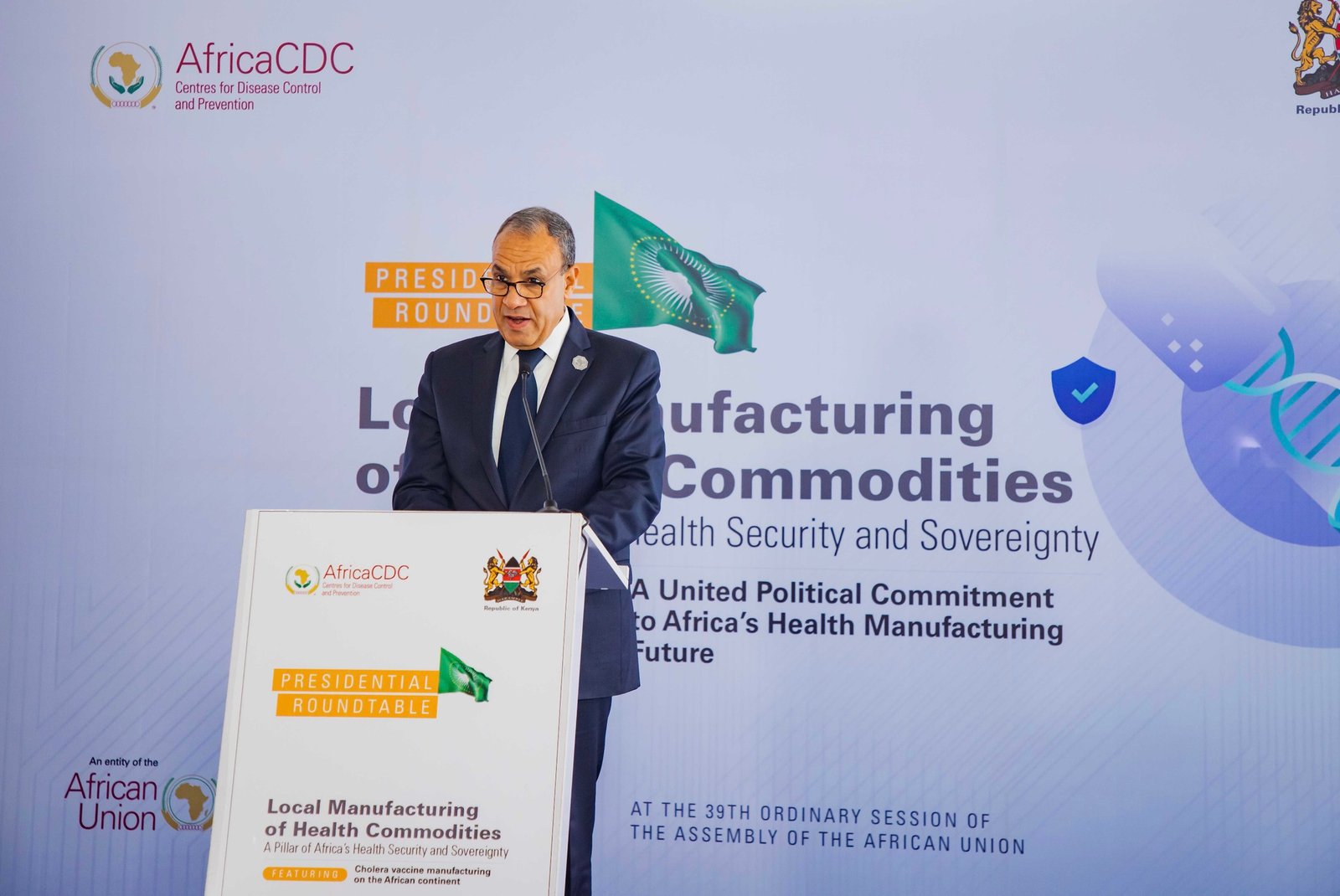
ADDIS ABABA, Feb. 16, 2026 — African leaders have thrown their weight behind one of the continent’s most ambitious industrial projects in decades: building a domestic health-products industry large enough to supply most of Africa’s medicines, vaccines, diagnostics, and medical equipment within a generation.
A declaration adopted on Feb. 14 on the sidelines of the African Union’s 39th Summit commits governments to meet at least 60% of Africa’s health-product demand through local manufacturing by 2040, backed by pooled procurement, targeted financing, and regulatory integration across the continent.
Behind the public-health framing lies a hard-nosed economic calculation: Africa’s heavy reliance on imports drains foreign exchange, exposes countries to supply shocks, and leaves governments vulnerable during crises — risks laid bare during the COVID-19 pandemic.
A $50-Billion Market Up for Capture
Africa’s pharmaceutical market is projected to exceed $50 billion within the next decade, yet the vast majority of that spending flows to foreign producers.
By aggregating demand through a continent-wide purchasing system — the African Pooled Procurement Mechanism (APPM) — policymakers hope to redirect that spending toward African manufacturers, creating a guaranteed market large enough to attract serious investment.
For investors, predictable demand is the missing ingredient that has historically kept large-scale pharmaceutical production from taking off across the continent.
Long-term purchase agreements, often called offtake contracts, are expected to:
- Reduce revenue uncertainty
- Support project financing
- Enable economies of scale
- Encourage multinational partnerships
If executed effectively, the APPM could function as a market-maker similar to global procurement programs run by organizations such as Gavi — but with a strategic “Buy African” mandate.
From Aid Dependency to Industrial Policy
The declaration signals a shift away from donor-driven health supply toward state-led industrial policy.
Governments are positioning health manufacturing as a national-security sector, comparable to energy or food production. The strategy combines trade policy, public procurement, financing, and skills development — hallmarks of classic industrialization efforts.
“This is not just about hospitals,” said one senior policy adviser involved in the discussions. “It is about controlling a strategic supply chain.”
The Africa Centres for Disease Control and Prevention (Africa CDC) will coordinate implementation through a continental manufacturing platform designed to align national plans and avoid duplication.
Financing: The Critical Bottleneck
Pharmaceutical manufacturing is capital-intensive and highly regulated, requiring billions of dollars in upfront investment and long development timelines.
To address this, leaders endorsed mobilizing blended finance — combining public funds, development finance institutions, and private capital — including the creation of a dedicated capital fund linked to the procurement mechanism.
Still, attracting private investors will depend on whether governments can deliver on procurement commitments and regulatory reforms.
Previous attempts at industrial policy across the continent have often faltered due to inconsistent policy environments and weak execution.
Building an Integrated Supply Chain
Manufacturing medicines requires more than factories. It depends on:
- Skilled scientists and technicians
- Reliable electricity and logistics
- Regulatory capacity
- Research and development ecosystems
- Access to raw materials
To address these constraints, the AU plans to expand regional training and innovation hubs through Africa CDC’s Capacity and Capability Networks.
Rather than duplicating facilities in every country, policymakers envision a distributed production model in which regions specialize in different segments of the value chain.
Regulatory Harmonization: Lowering Barriers to Scale
Fragmented regulatory systems have long forced manufacturers to navigate dozens of separate approval processes, raising costs and slowing expansion.
Efforts to harmonize standards — aligned with broader continental integration under the African Continental Free Trade Area — aim to create a unified pharmaceutical market.
For manufacturers, this could dramatically shorten time to market and allow production at scale.
Kenya to Host Implementation Summit
To accelerate progress, leaders endorsed an Extraordinary Summit on Health Products Manufacturing to be held in Nairobi in the second quarter of 2026, chaired by Kenyan President William Ruto in his role as AU Champion on Local Manufacturing.
The meeting is expected to focus on securing concrete investment pledges and operational milestones — a sign that governments are aware the initiative’s credibility hinges on rapid implementation.
Winners and Losers
Countries with established pharmaceutical sectors — including South Africa, Egypt, Morocco, Kenya, Tunisia, Nigeria, and Ethiopia — are likely to attract the bulk of early investment as regional production hubs.
Multinational drugmakers may also see new opportunities through joint ventures, technology transfer agreements, and contract manufacturing arrangements.
Conversely, global exporters that currently dominate African markets could face increasing competition if local producers scale successfully.
Strategic Autonomy in an Uncertain World
The initiative comes amid growing geopolitical fragmentation and supply-chain nationalism, trends that have prompted governments worldwide to reshore critical industries.
For African countries, the stakes are particularly high. During the pandemic, wealthier nations secured early access to vaccines while many African states waited months for deliveries.
Reducing that vulnerability has become a central policy priority.
Execution Risks Remain High
Despite strong political consensus, the road ahead is fraught with challenges:
- Large financing gaps
- Infrastructure deficits
- Skills shortages
- Competition from cheaper imports
- Governance and coordination hurdles
Without sustained political commitment across multiple administrations, long-term projects could stall.
A Defining Test of Continental Integration
If successful, the manufacturing push could become one of the most tangible economic benefits of continental cooperation — demonstrating that African integration can deliver industrial transformation, not just policy declarations.
Failure, however, would reinforce skepticism about large-scale pan-African initiatives.
For now, the declaration signals a clear shift: Africa is no longer content to be the world’s largest importer of medicines. It wants to become a producer — and a player — in one of the most strategic industries of the 21st century.

About Addis Insight
Addis Insight is Ethiopia’s fastest growing digital news platform, providing consumers with the latest news from Ethiopia and its diaspora. We provide marketers with innovative opportunities to leverage our stories and overall brand with a fiercely curious and highly engaged audience.