Ethiopian Airlines Signs Landmark Deal to Turn Food Waste Into Energy

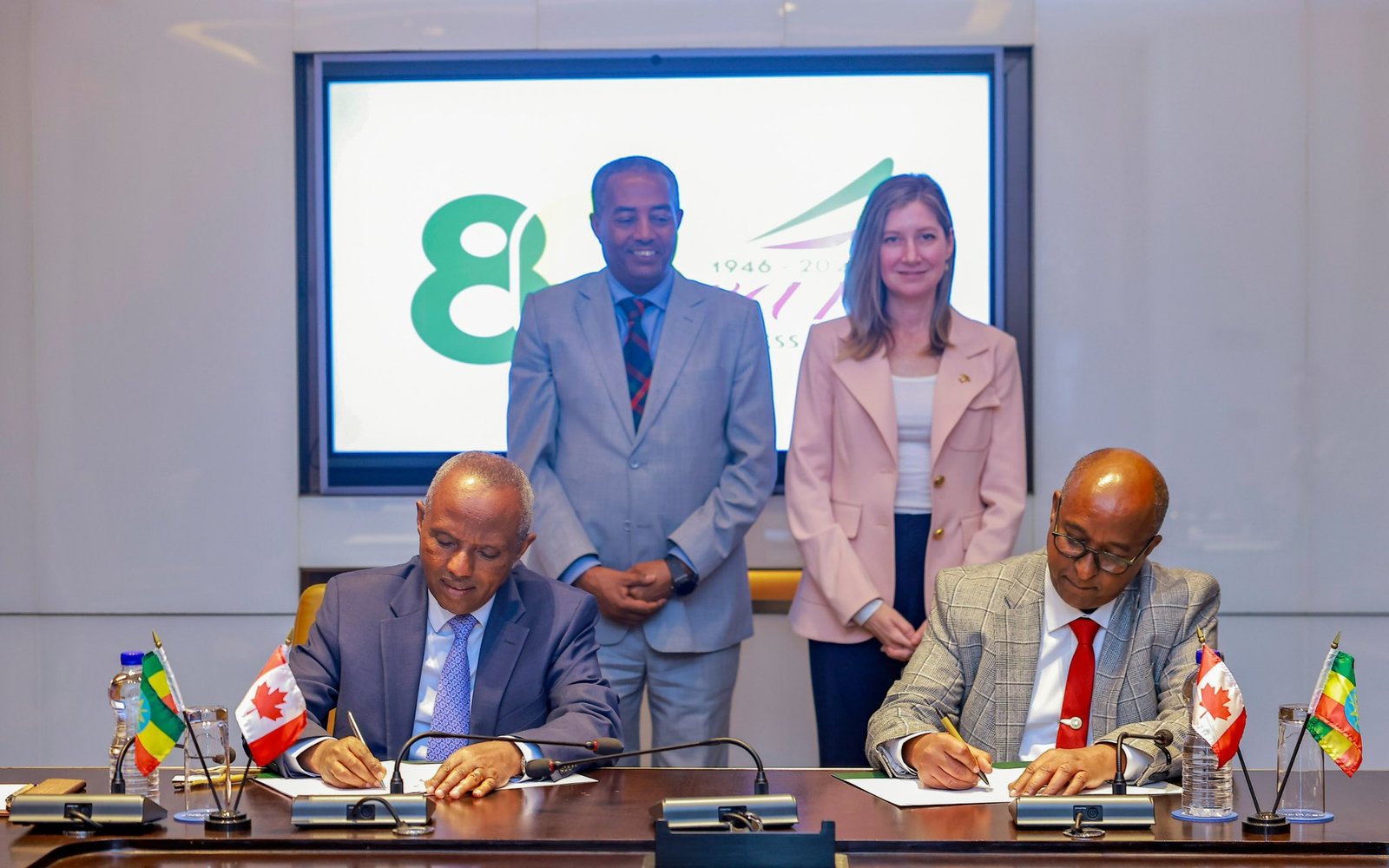
Addis Ababa — Ethiopian Airlines Group has signed a tripartite memorandum of understanding with Canada-based Provectus Enterprising Inc. and Ethiopia’s Fusion Global Solutions to convert aviation catering waste into biomass and other sustainable outputs, marking a significant step in the carrier’s push toward circular economy practices.
The agreement, signed in the presence of Cheryl Urban, Assistant Deputy Minister at Global Affairs Canada, targets one of the aviation industry’s most persistent environmental challenges: the disposal of large volumes of international catering waste. Such waste is typically incinerated or landfilled due to strict biosecurity regulations, generating emissions while forfeiting potential economic value.
Under the MoU, the partners will collaborate to process food waste generated from airline catering operations and transform it into renewable biomass and other usable byproducts. The initiative is expected to focus initially on waste streams from Ethiopian Airlines’ hub operations in Addis Ababa, one of Africa’s busiest aviation centers.
From Liability to Resource
Airline catering waste is uniquely complex. International regulations often classify it as high-risk material due to potential contamination from foreign pathogens, making disposal costly and environmentally damaging. Converting it into biomass could both reduce landfill use and produce energy or industrial inputs.
For Ethiopian Airlines, Africa’s largest carrier by revenue and fleet size, the project aligns with broader sustainability commitments as the global aviation sector faces mounting pressure to decarbonize.
“This initiative represents a shift from linear waste disposal to circular resource recovery,” said a person familiar with the project who was not authorized to speak publicly. “Instead of treating catering waste as hazardous refuse, the aim is to extract value while meeting safety standards.”
Potential outputs include biofuel feedstock, soil enhancers, or industrial biomass pellets, depending on the technology deployed.
Strategic Importance for Ethiopia
If implemented at scale, the project could have implications beyond aviation. Ethiopia faces mounting urban waste management challenges alongside growing energy demand. Biomass conversion facilities could help address both, particularly if technology transfer and local capacity building are incorporated.
Fusion Global Solutions, the Ethiopian partner, is expected to coordinate local implementation, regulatory engagement, and infrastructure integration. Provectus Enterprising will likely contribute technical expertise and processing technologies developed in Canada.
The presence of a senior Canadian official at the signing underscores Ottawa’s interest in green partnerships with African economies, particularly in sectors combining climate mitigation with economic development.
Aviation’s Sustainability Push
Airlines worldwide are exploring ways to reduce their environmental footprint beyond aircraft efficiency, including sustainable aviation fuels (SAF), carbon offsetting, and waste reduction. Ground operations — from catering to maintenance — are increasingly viewed as areas where near-term gains can be achieved.
For Ethiopian Airlines, which operates a major catering facility serving dozens of international carriers, waste volumes are substantial. Transforming this stream into energy or marketable products could also generate new revenue sources while lowering disposal costs.
Next Steps and Uncertainties
As with most MoUs, the agreement outlines intentions rather than binding commitments. Key questions remain around financing, regulatory approvals, technology deployment timelines, and whether facilities will be built domestically or through public-private partnerships.
Still, analysts say the project reflects a broader trend: African aviation hubs positioning themselves not only as transport centers but also as sustainability innovators.
If successful, Addis Ababa could become a model for waste-to-energy solutions tailored to aviation — a sector where environmental progress has historically lagged behind rapid growth.
For Ethiopian Airlines, the initiative signals an effort to future-proof operations as environmental standards tighten globally. What was once discarded as hazardous waste may soon power a new generation of sustainable infrastructure.

About Addis Insight
Addis Insight is Ethiopia’s fastest growing digital news platform, providing consumers with the latest news from Ethiopia and its diaspora. We provide marketers with innovative opportunities to leverage our stories and overall brand with a fiercely curious and highly engaged audience.