Disaster Cycles and the Lessons from the Gamo–Gofa Landslide

By- Dr Genet Kifle
When people are asked about their worst nightmares, many describe the same thing: falling from a great height, suspended in the air, not knowing where they will land.
For me, it’s different.
I fear being buried alive.
I have never experienced it, and I wish I didn’t have to, but I imagine the horror: the weight, the darkness, the silence, the inability to move or breathe. That might be the closest feeling to what victims of landslides experience in their final moments.
Survivors often describe it the same way: there is no warning.
A sudden roar.
The ground beneath you, the very earth you trust to hold your body, shifts.
It moves. It collapses. It takes everything with it.
There is nothing to hold onto, because everything is moving.
And for those who do not survive, the story ends there, buried beneath soil that, moments before, felt safe.
In many parts of Ethiopia, rain is considered a comfort. It is the sound people fall asleep to, the steady rhythm on tin roofs, a familiar and soothing presence after long days. But in the woredas of the Gamo-Gofa zone, that same rain told a different story.
It did not soothe.
It warned.
And then, it destroyed.
Missed Patterns
The recent landslides in southern Ethiopia, especially affecting the communities of Gamo-Gofa Zone, have once again revealed a painful truth: disasters rarely happen alone. They often follow patterns; when ignored, these patterns turn natural hazards into human tragedies.
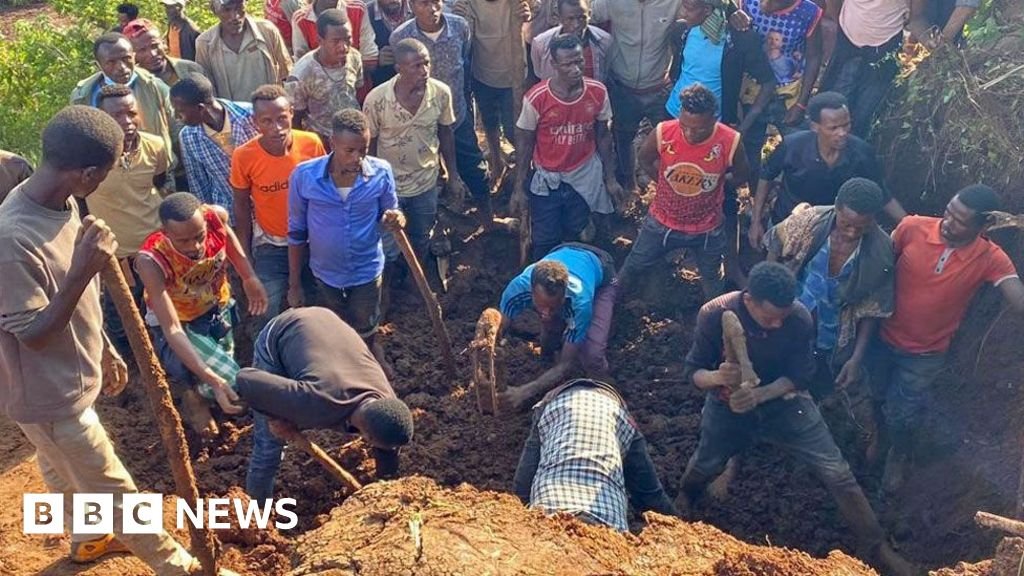
In 2024, a devastating landslide in the Gofa zone claimed the lives of more than 200 people with official figures exceeding 229. It was one of the deadliest landslides in the country’s recent history and even the world. Images circulated widely across social media: families searching through debris, communities digging through mud with bare hands, and volunteers rushing to the scene. The response was immediate and emotional but largely reactive rather than proactive.
Two Years later, in March 2026, another landslide struck the same region, triggered by heavy rain, and it killed at least 50 people, with the death toll rising to around 70 as search and rescue efforts continued.
The recurrence of such tragedies raises an uncomfortable but necessary question: Are we witnessing a natural disaster and human demise solely from its magnitude, or a failure of a system?
It is said that “Disasters don’t wait for your system to get better, they strike and expose your weak system.” In previous situations when these landslides occur, rescue teams mobilize, communities dig survivors out of the rubble, humanitarian aid arrives, and social media amplifies the tragedy. These responses are important and often lifesaving. However, like the ice berg, it represents only the visible tip of the disaster management cycle.
A landslide, in simple terms, is the movement of a large mass of earth-like soil or rocks down slope.
Landslides usually occur when something weakens the ground, from scientific understanding are caused by
- Heavy or Prolonged rainfall
- Environmental degradation, deforestation
- Poor land-use planning
- Construction or settlement on unstable slopes
- Lack of drainage systems and settlement in steep areas
Fortunately, most of these factors are preventable through proper planning.
From previous incidents in Ethiopia, when these landslides occur, rescue teams are usually members of the community without any specialized prior training. These first responders dig survivors out of the rubble, humanitarian aid arrives, and social media amplifies the tragedy. These responses are important and often lifesaving. However, like the ice berg, it represents only the visible tip of the disaster management cycle.
Warning Signs ignored before the Hazard strikes
The 2026 Reports from the Intergovernmental Authority on Development (IGAD ) Climate Prediction and Applications Center (ICPAC) have shown that rainy seasons will be wetter than normal from March to May. Heavier rain predictions in East Africa that can cause flooding were reported. Dozens were killed in Kenya after torrential rain hit the capital, Nairobi ,recently. This was a missed opportunity to prepare our system. Even local Meteorological reports preceding the recent landslide indicated heavy ‘’Belg-season’’ rainfall and flooding.
These environmental red flags were either ignored or not acted upon appropriately. Even when recognized, I can confidently say that prevention and mitigation measures were not implemented.
Instead of prioritizing the scientific assessment of geological risks and environmental conditions, attention sometimes shifts toward cultural interpretations, such as attributing the disaster to the killing of a python. While these narratives reflect local beliefs, they divert focus from the critical need to address structural and environmental realities with actionable solutions.
When Hazards Become Disasters
A landslide, a natural hazard, becomes a disaster when people and infrastructure are exposed to that hazard without protection.
Communities in the Gamo–Gofa area often inhabit steep terrain because of the fertile land. Settlement patterns push people into risk-prone areas. Without land-use regulation, hazard mapping, or relocation strategies, these communities remain vulnerable.
If a region repeatedly experiences landslides, the question must shift from “Why did this disaster happen?” to “Why were people still exposed to this risk?”
Without addressing these questions, response efforts risk becoming repetitive acts of emergency rather than steps toward prevention.
Social media during Disasters, Clicks, Aid, Accountability
Social media has played a pivotal role, time and again, in creating awareness and has remained a great accessible option in showing what is happening on the grounds in both incidents. Capturing the raw emotions of the community, which the mass media failed to do.
Since the pandemic, the use of geo-mapping to find the real-time locations of people in danger, who send out distress signals has been shown to have a positive impact on disaster management. Especially in areas that already have network coverage. It can be used for Communities sending distress signals for help, or to track location. The major challenge is access and the loss of connection due to inclement weather.
However, some content creators, especially those on TikTok, exploited the situation. Many individuals documented people at their most vulnerable, turning human suffering into content. What makes it more troubling is that it is not an isolated incident. In many cases, such actions are driven not only by the desire to help but by the pursuit of views and online growth. This publicity-driven humanitarianism is deeply disturbing as it exploits people’s pain for visibility, and it needs to be addressed as soon as possible.
Other Cons of social media during disasters include the spread of false information faster than the disaster itself. False Artificial Intelligence (AI) generated images were widely shared across social media, which can mislead people, create confusion, and shift attention away from those who are actually affected, undermining the seriousness and reality of the situation. Using Social media with caution is essential.
The government should ensure timely, accurate information for public awareness, hold platforms and users accountable. Ensuring transparency in online aid so that support reaches real victims rather than opportunistic actors, as was done recently by the National Disaster Risk Management Commission of Ethiopia.
Response only system: “I will worry about it when it happens … ’’
When disaster management focuses primarily on response, a predictable pattern emerges: Sadly this has been the pattern I have been seeing.
- Hazard occurs
- Lives are lost
- Emergency Response mobilized in our case, the community
- Media attention peaks (social media )
- Aid flows
- Attention fades
- Communities remain at the same risk with the same threat looming.
Eventually, the cycle repeats. Breaking this cycle requires shifting the focus from emergency response to risk reduction.
Disaster risk reduction must occur before hazards strike, not only after tragedy unfolds.
For landslide-prone regions like Gamo -Gofa, practical measures could include:
- Identify high-risk slopes
- During heavy rainfall periods, the introduction and strengthening of the community-based warning system
- Environmental protection, reforestation to stabilize the soil.
- Managing runoff water
- Preventing settlements in unstable areas
- Community education about landslide risks and evacuation procedures
- Relocation programs for the most dangerous zones
These measures require political commitment, technical expertise, and sustained investment, but they save lives.
Learning From the Tragedy
Every disaster presents an opportunity to learn. But learning requires honest reflection.
If the recent Gamo–Gofa landslide is treated simply as another unfortunate natural event, the cycle will likely repeat. Heavy rains will come again. Slopes will weaken again. Communities will remain exposed. If the disaster is examined through the lens of risk, governance, and preparedness, it can become a turning point.
The real measure of disaster management is not how quickly bodies are recovered from the mud. It is how many lives are saved before the mud ever begins to move. By the time people are digging through landslide debris, the opportunity for prevention has long passed.

About Addis Insight
Addis Insight is Ethiopia’s fastest growing digital news platform, providing consumers with the latest news from Ethiopia and its diaspora. We provide marketers with innovative opportunities to leverage our stories and overall brand with a fiercely curious and highly engaged audience.