
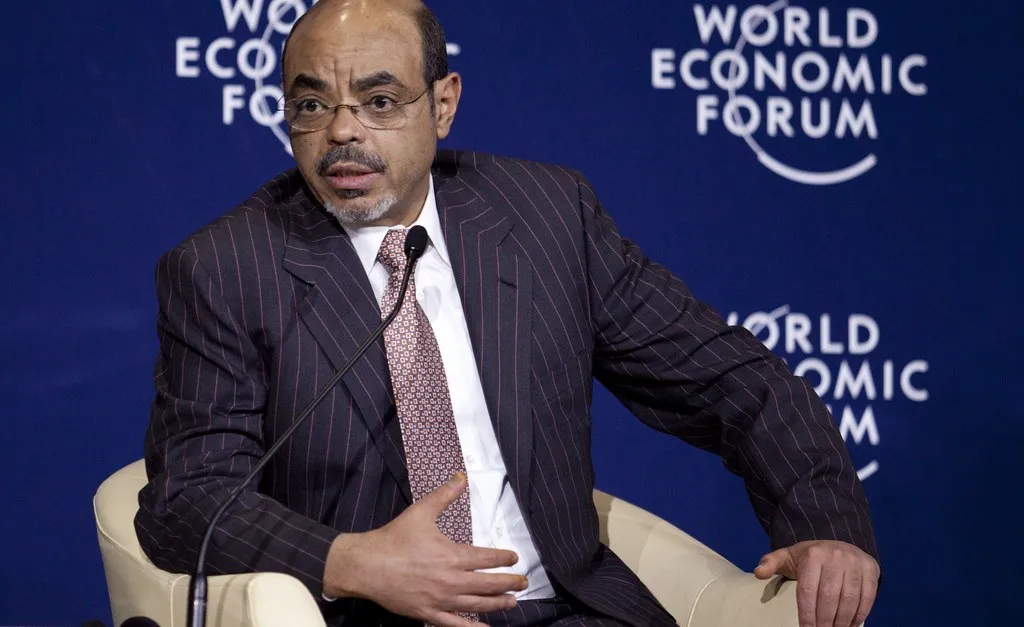
The Age of Water: Meles Zenawi’s Enduring Legacy in Ethiopia’s Dam Renaissance
Ethiopia’s four-decade hydropower revolution—anchored by the vision of Meles Zenawi—turned rivers into sovereignty, megawatts into industry, and national sacrifice into the financing of Africa’s largest dam: the GERD.
Ethiopia is often called the “water tower of Africa,” yet for decades its rivers flowed largely untapped. Despite an estimated hydropower potential of 45 gigawatts, until the 1990s the country was plagued by rolling blackouts, industries constrained by electricity shortages, and millions of households living in darkness. It was under Prime Minister Meles Zenawi that water was reframed as more than a natural endowment. He elevated it to a national strategy—linking hydropower to sovereignty, industrialization, and Ethiopia’s global standing.
Meles Zenawi’s Developmental Vision
When Meles assumed power in the 1990s, Ethiopia was one of the least electrified countries in the world. He recognized that chronic shortages cut GDP growth by at least 2% annually. In response, he advanced the developmental state model, where government—not markets—drove long-term transformation. At the center of this plan stood dams.
Hydropower served dual purposes: powering industrialization at home and projecting influence abroad. By exporting electricity to Djibouti, Sudan, and eventually Kenya, Ethiopia would become a regional energy hub. This outward-facing policy elevated dams from mere infrastructure to instruments of diplomacy.
The boldest move came when international lenders—often under pressure from downstream politics—refused to finance projects on the Blue Nile. Meles countered by launching a radical experiment: domestic financing. Through bonds, payroll deductions, and public donations, Ethiopians collectively underwrote the Grand Ethiopian Renaissance Dam (GERD). His declaration—“This will be our dam”—turned a technical project into a national monument of pride and defiance.
From Precedent to Monument: The Dam Timeline
Key commissioning and filling milestones across Ethiopia’s modern hydropower buildout.
Note: Colors differentiate commissioning (blue), GERD first power/fillings (red), and ongoing commissioning (slate).
Milestones and Case Studies
Tekeze (2009): Engineering Precedent
Standing 185 meters high, the Tekeze Dam was once Africa’s tallest double-curvature arch dam. With 300 MW capacity, it signaled Ethiopia’s ability to handle complex megaprojects. Chinese partner Sinohydro played a central role, reflecting Meles’ pragmatic pivot toward new financiers as Western lenders hesitated.
Omo–Gibe Cascade (2004–ongoing)
The Omo system was designed as a chain: Gibe I, II, III, and the ongoing Koysha. Together they harness the river at multiple points, maximizing energy yield. Gibe III (1,870 MW) more than doubled Ethiopia’s installed capacity when commissioned in 2015. But critics warned of its ecological costs—altered flood cycles threatening 200,000 agro-pastoralists and destabilizing Kenya’s Lake Turkana. For Meles, however, national electrification outweighed localized risks.
Tana Beles (2010): Power and Peril
With 460 MW, Tana Beles symbolized multipurpose water use: hydropower plus irrigation potential for 140,000 hectares. Yet dangerous discharges led to human losses in the early 2010s. This tragedy underscored a recurring theme—development first, safeguards later.
GERD (2011–2025): The National Monument
The Grand Ethiopian Renaissance Dam is the crown jewel: a final design of 6,450 MW capacity, a 74 billion m³ reservoir, and the largest hydroelectric project in Africa. Laid in 2011 by Meles himself, GERD was financed not by the World Bank but by Ethiopian citizens. The project reordered Nile geopolitics, forcing Egypt and Sudan into the 2015 Declaration of Principles and shifting negotiations from colonial-era dominance to equitable use. First power arrived in 2022, and subsequent fillings advanced Ethiopia’s leverage and energy stability.
The Capacity Ladder: From Hundreds to Thousands of MW
Comparing installed capacities across Ethiopia’s flagship projects.
GERD Financing: The Civic Movement
Domestic bonds, payroll deductions, and donations replaced foreign loans—turning funding into nation-building and insulating strategy from external vetoes.
Economic, Social, and Geopolitical Impacts
Ethiopia’s installed capacity has grown more than tenfold since 1991. Cities experience fewer outages, industries operate with greater reliability, and cross-border energy sales generate hard currency. Dams now form the backbone of Ethiopia’s industrial policy.
But this success carried costs. Communities around Tana Beles and the Omo Valley bore heavy burdens: lost livelihoods, safety risks, and environmental disruption. These costs fell disproportionately on marginalized groups with limited bargaining power. The lesson is not to retreat from ambition, but to pair it with robust environmental and social safeguards, transparent data, and community compensation frameworks.
On the geopolitical front, GERD has been the game-changer. By self-financing and pressing forward, Ethiopia rewrote the Nile order. While negotiations remain tense—particularly over drought management and long-term operating rules—Ethiopia now commands a seat at the table as an upstream power with credible leverage. The ultimate prize is a basin-wide cooperative regime that reduces evaporation losses, curbs siltation, and lowers flood risk for all.
Major Dams: Quick Reference
| Dam | Year | River | Capacity (MW) | Contractor | Notes |
|---|---|---|---|---|---|
| Gibe I | 2004 | Omo | 184 | Webuild | Opened Omo cascade |
| Tekeze | 2009 | Atbara | 300 | Sinohydro | Africa’s tallest arch dam (at completion) |
| Tana Beles | 2010 | Blue Nile | 460 | Webuild | Interbasin transfer |
| Gibe II | 2010 | Omo | 420 | Webuild | Underground tunnels |
| Gibe III | 2015 | Omo | 1,870 | Webuild | RCC gravity dam |
| GERD | 2011–24 | Blue Nile | 6,450 | Webuild, GE, CGGC | Largest in Africa |
| Koysha | Ongoing | Omo | 2,160 | Webuild | Fourth Omo plant |
The Enduring Legacy of Meles Zenawi
More than a decade after his death, Ethiopia still builds within the framework Meles designed. His successors Hailemariam Desalegn and Abiy Ahmed carried the hydropower agenda forward while expanding to urban corridors and industrial parks. The ethos remains Melesian: infrastructure as destiny, water as sovereignty.
His legacy endures in three dimensions:
- Economic Transformation: Hydropower is powering urbanization, factories, and export earnings.
- Nation-Building: The GERD bond drive remains the largest civic financing effort in Ethiopia’s history.
- Geopolitical Reordering: Ethiopia secured recognition—de facto if not de jure—of its right to develop upstream resources.
Open questions remain: Can megawatts translate to broad-based jobs and inclusive growth? Can safeguards fully protect local communities in future projects? And can upstream–downstream cooperation evolve beyond crisis diplomacy into stable, rules-based coordination? The answers will define the next chapter of Ethiopia’s “Age of Water.”
Conclusion
Ethiopia’s dam renaissance is both triumph and trade-off. It is triumph because a country once defined by scarcity now exports power. It is trade-off because the costs—environmental and social—were often paid locally while benefits accrued nationally. Above all, it is the story of Meles Zenawi’s enduring vision: that rivers could be more than water—they could be engines of sovereignty, symbols of national pride, and catalysts for a new African future.
FAQ: Ethiopia’s Dam Renaissance
Why did Meles finance GERD domestically?
To bypass external vetoes, assert sovereignty, and unify the nation behind a shared project.
What makes GERD different?
Its scale (6,450 MW), sovereign financing, and geopolitical impact distinguish it from all predecessors.
What criticisms exist?
Concerns over ecological impacts (Lake Turkana) and community safety (Beles discharges).
What’s next for Ethiopia?
Grid reliability, industrial demand, regional trade, and cooperative drought management with neighbors.
