Ethiopia Plans 10 More Nile Dams — Here’s What You Need to Know

Ethiopia Plans 10 More Nile Dams — Here’s What You Need to Know
With GERD nearing inauguration, Addis Ababa is pivoting from a singular monument to a managed river system. A ten‑dam vision would optimise flows, raise firm energy, and underwrite a regional power market—if Ethiopia can shift from sovereign mobilisation to bankable PPPs.
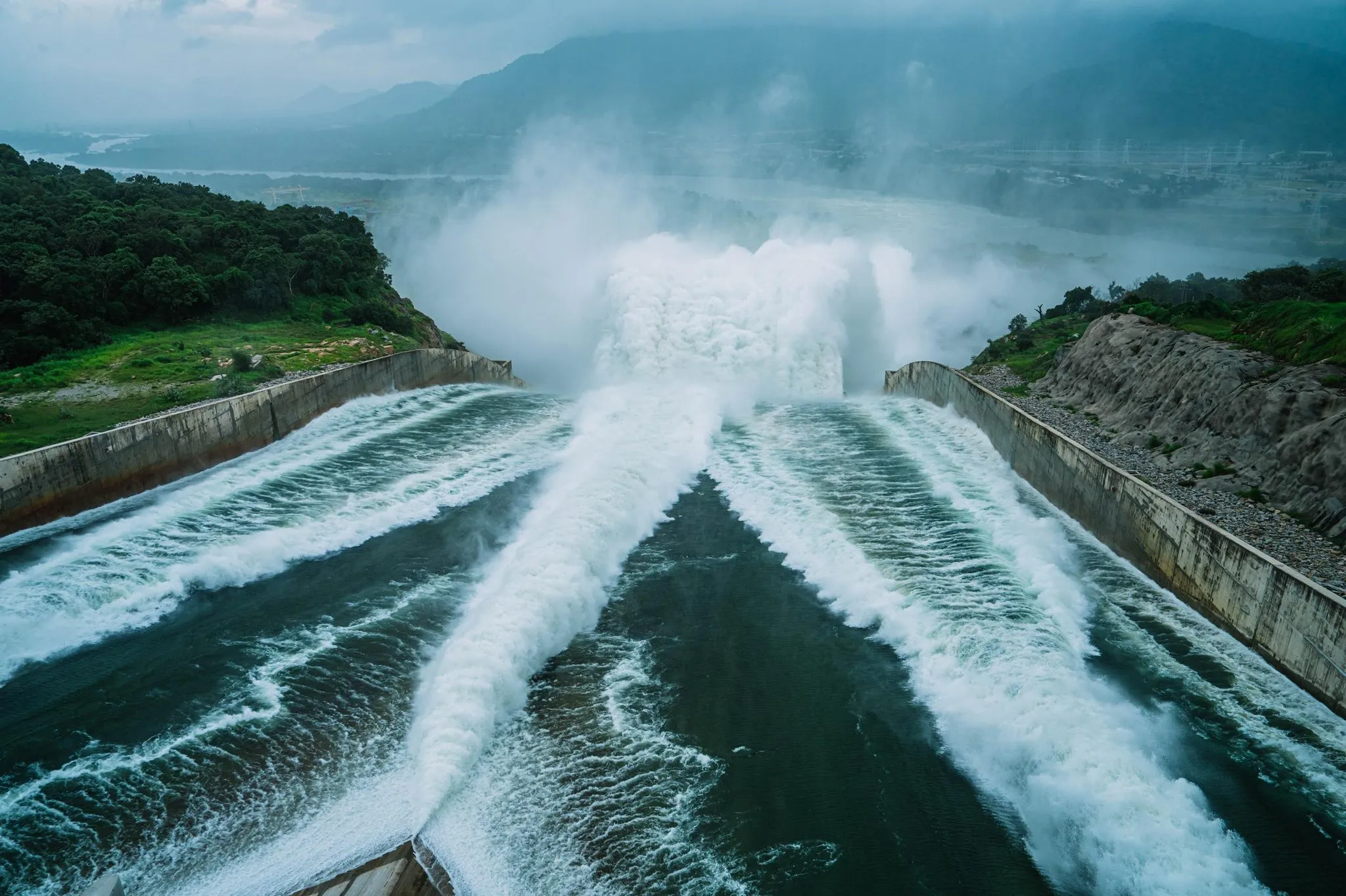
With the Grand Ethiopian Renaissance Dam (GERD) approaching its formal inauguration, Prime Minister Abiy Ahmed has set out a bigger horizon line: a study plan for ten additional dams across the Nile Basin and its tributaries. Read literally, the announcement doesn’t imply shovels in the ground for ten sites tomorrow. Read strategically, it signals Ethiopia’s shift from building a singular monument to designing a managed river system. The GERD becomes Act I—a proof of concept in engineering, logistics, and political will—while the ten‑dam vision sketches Act II: a cascade approach that optimises hydrology, stabilises firm energy, and anchors a regional power market.
This article unpacks the technical logic behind likely sites, the financing pivot from state‑led mobilisation to public‑private partnerships (PPPs), and the geopolitics of managing a shared river amid downstream scepticism. It argues that the only feasible path begins with one flagship, bankable PPP—most plausibly Mendaia—whose success would create a replicable legal‑financial template for subsequent projects. In short, from unilateral build‑out to coordinated bankability.
GERD as paradigm: capability, confidence, leverage
Domestic capacity as the hidden asset
GERD’s most enduring contribution may not be its nameplate capacity; it is the human and institutional capability forged across a 14‑year project cycle. The experience base within Ethiopian Electric Power (EEP), domestic contractors, and supervising agencies now spans complex civil works, turbine commissioning, grid integration, sediment management, and multi‑year reservoir operations. That tacit knowledge reduces execution risk for follow‑on projects—an advantage that cannot be imported and is difficult for rivals to discount.
A fait accompli that reorders incentives
With the GERD physically standing and its vast reservoir in operation, the political question has shifted. The historic debate—could Ethiopia build at all?—is over. The active debate is operational: how it will be run during drought cycles, how much data will be shared in real time, and what long‑run flow variability looks like for Sudanese and Egyptian infrastructure. The presence of the dam also re‑weights bargaining: it demonstrates the limits of external pressure and reframes negotiations from abstract rights to concrete operating rules.
From one dam to a system: the ten‑project anatomy
The Abay (Blue Nile) cascade as the backbone
The technical core of Ethiopia’s next phase is not an unknown frontier but the revival of well‑studied main‑stem sites on the Abay. Three large anchors dominate credible lists: Mendaia (≈2,000 MW), Beko Abo (≈2,100 MW) and Karadobi (≈1,600 MW). A cascade approach alters both physics and economics: rather than over‑reliance on a single regulator (GERD), multiple reservoirs distribute maintenance and drought risk, smooth seasonal volatility, and capture sediment upstream, preserving downstream turbines and live storage.
In capacity planning terms, cascades raise firm energy—the dependable baseline grids and export contracts can count on—relative to headline nameplate numbers.
Tributaries as diversification and resilience
To reach “ten,” tributary projects serve dual aims: energy and water management for agriculture. In the Dedessa sub‑basin, options include a ≈301 MW hydro site and irrigation upgrades. The Tekeze system, building on Tekeze I (300 MW), could add a ≈450 MW Tekeze II leveraging existing corridors. Within the Abay basin, Dabus and Chemoga‑Yada surface regularly in PPP pipelines; outside the Nile, Halele‑Warabessa and Genale‑Dawa stabilise the national grid even if they do not affect Nile politics.
The financing pivot: from mobilisation to bankability
Why the GERD model won’t scale
A multi‑dam programme costing tens of billions cannot ride on patriotic bonds and payroll deductions. Ethiopia’s power plan anticipates private capital, DFIs and export‑credit agencies. For investors, three pain points dominate: FX convertibility, offtaker risk & tariff sufficiency, and ESG/ transparency. Without credible solutions, the cost of capital spikes—or capital does not show up.
PPP governance ≠ sovereign build
GERD was accountable primarily to domestic constituencies. PPP‑era projects will answer to lenders applying World Bank/IFC standards. The trade‑off: more preparation and documentation, in return for cheaper, more abundant capital and reputational lift.
| Dimension | What lenders look for | What Ethiopia can do |
|---|---|---|
| FX & convertibility | Hard‑currency debt service security | Ring‑fenced escrow, PRGs, export‑revenue sweeps |
| Offtaker strength | Solvent utility, predictable tariffs | Multi‑year tariff formula; loss reduction; sovereign support |
| ESG & ESIA | IFC‑grade assessment & mitigation | Transboundary hydrology, resettlement plans, grievance systems |
| Contracts | Balanced, enforceable PPA/EPC/O&M | Change‑in‑law, curtailment rules, capacity + energy tariff |
| Transparency | Open procurement & reporting | Data portals on operations & progress |
Geopolitics: between energy‑hub ambition and downstream red lines
Exports & the Eastern Africa Power Pool
Ethiopia’s goal is not merely to meet domestic demand, but to become a regional anchor. Interconnectors to Sudan, Djibouti and Kenya already support trade; links to Tanzania and South Sudan are feasible next steps. Low marginal‑cost hydropower, paired with dependable firm energy, can crowd out diesel generation in neighbours and generate hard‑currency receipts to help service dam debt.
Downstream calculus: law, leverage and optics
Egypt and Sudan seek binding rules on filling and operation. Their tactics—legal‑diplomatic challenges and reputation risk for financiers—aim to slow upstream momentum. Ethiopia’s counter is operational transparency: demonstrate with data that regulated flows reduce Sudan’s flood risk and that drought protocols can be codified without ceding sovereign control over future development.
Execution playbook: turning intent into assets
- Start with one flagship PPP (Mendaia) and make it bullet‑proof. Investment‑grade ESIA including transboundary analysis; layered FX backstops; clear PPA structure with capacity+energy components.
- Strengthen the offtaker & tariff credibility. A multi‑year tariff escalator, insulated from ad‑hoc freezes; improved collections and loss reduction; targeted subsidies outside the utility balance sheet.
- Codify operational transparency for GERD. Data protocols on reservoir levels, releases and inflow forecasts build lender and neighbour confidence.
- Align hydropower scheduling with export contracts. Stochastic inflow modelling and explicit drought‑year rules reduce over‑commitment risk.
- Engineer sediment management from day one. Use Karadobi and targeted sluicing/flush strategies to protect downstream turbines and preserve live storage.
- Build domestic EPC/O&M capability. Skills‑transfer clauses, vocational pipelines and local O&M firms become a strategic export over time.
ESG is a gatekeeper, not an afterthought
Under PPP/IFI scrutiny, ESG is a gating function for capital. Investment‑grade ESIAs should map resettlement with fair compensation and livelihood restoration; model transboundary hydrology under multi‑year drought; establish biodiversity offsets and ecological flow regimes; and create grievance mechanisms that resolve local disputes early.
Political economy: keeping public legitimacy intact
GERD’s legitimacy rested on sovereign achievement financed by Ethiopians. PPPs will look different: foreign sponsors, lender covenants and tariffs that must rise to service debt. The narrative should shift from sacrifice to dividend (cascade optimisation stabilises prices and funds services), from secrecy to stewardship (operational dashboards), and from project to programme (sequenced, criteria‑driven pipeline).
What success in 2030 looks like
- Mendaia reaches financial close with layered FX backstops and a balanced PPA.
- Formal GERD data protocols accepted by neighbours; multi‑season operating track‑record.
- Karadobi or Beko Abo advance to tender with compressed diligence cycles.
- Two tributary projects reach advanced studies with clear irrigation‑energy coordination.
- Tariffs follow a published escalator; losses and arrears fall; exports materially support hard‑currency needs.
…and what failure would mean
Stalled PPP closings due to FX and tariff politics; diplomatic flare‑ups that deter lenders; ESIA gaps that fail IFI standards; and a domestic narrative that sours on PPPs as “selling the river,” reviving unaffordable sovereign funding. In that world, the ten‑dam plan remains a speech, not a system.
Conclusion: from unilateral build to coordinated bankability
The GERD era proved Ethiopia could build—against odds, without external finance and despite diplomatic headwinds. The ten‑dam era must prove Ethiopia can bank—structure credible PPAs, guarantee convertibility, meet ESG standards and sequence a portfolio so each success lowers the cost and time of the next. The hinge is one flagship project. Make Mendaia bankable, and the template writes itself. Pair that with disciplined GERD transparency, credible offtaker reform and honest ESG, and Ethiopia moves from a single heroic dam to a durable hydropower system.
Sources & Notes
This analysis synthesises publicly available planning documents, feasibility studies and sector practice. Capacity and schedule values are indicative and may change with final designs, market conditions and hydrology. Infographics are schematic and not to scale.

About Addis Insight
Addis Insight is Ethiopia’s fastest growing digital news platform, providing consumers with the latest news from Ethiopia and its diaspora. We provide marketers with innovative opportunities to leverage our stories and overall brand with a fiercely curious and highly engaged audience.