Haddis Tilahun’s : The Ethiopian Entrepreneur Who Helped Rebuild Namibia’s Skyline

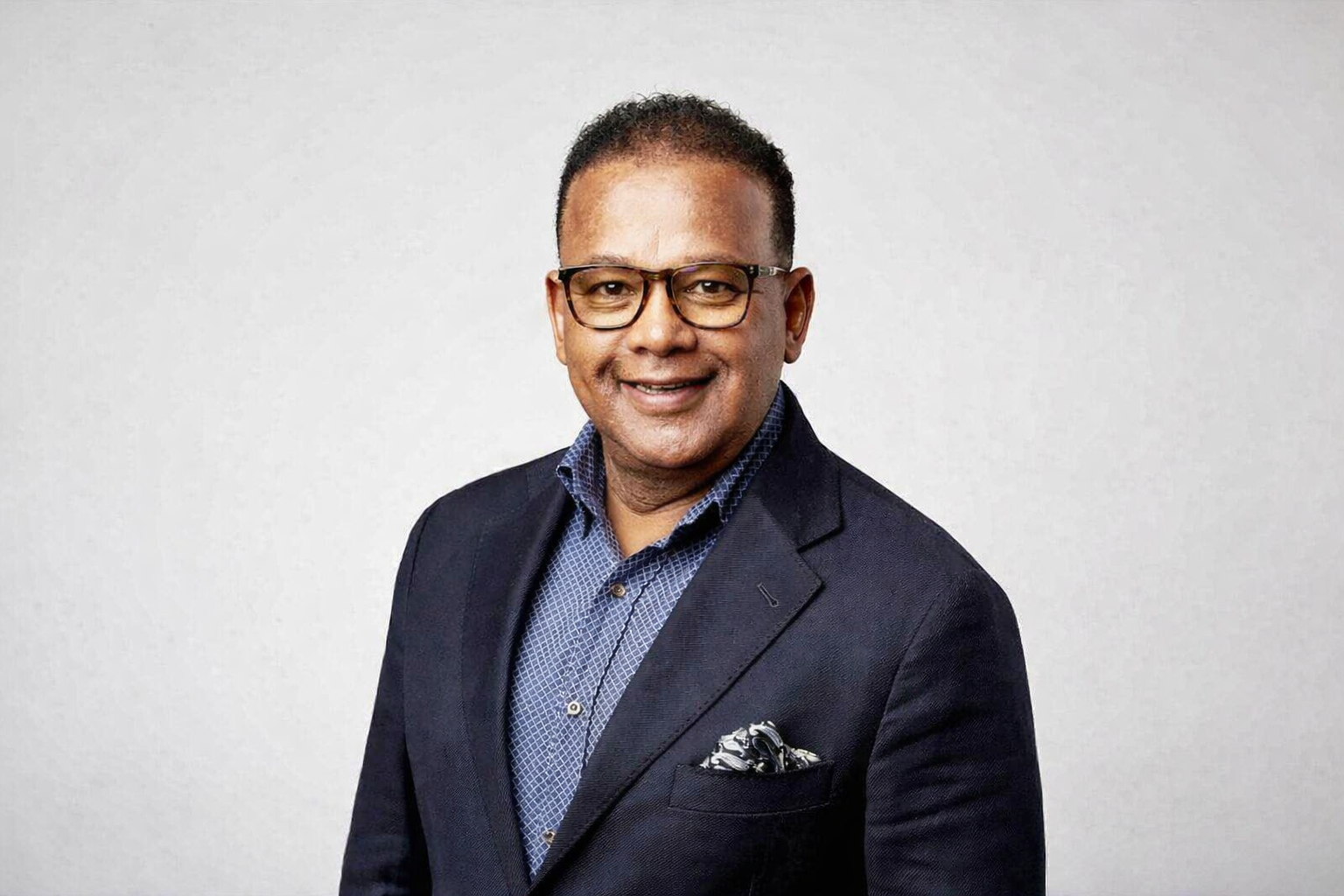
On a clear Windhoek morning, the city’s modern core feels like a promise written in glass: clean lines, sharp sunlight, and a skyline that didn’t always look like this. From Freedom Square, you can read the story in a single glance—hotels rising where there used to be empty plots; corporate headquarters stitched into the center of town; a capital city gradually teaching itself how to host the world.
Some of that reinvention carries one name again and again: Haddis Tilahun, an Ethiopian-born entrepreneur who built United Africa Group (UAG) into one of Namibia’s most visible privately held players in hospitality, property development, and adjacent services—a portfolio that, depending on where you stand, looks like either the architecture of ambition or the footprint of influence. (UAG Investments)
Tilahun’s public story is partly corporate—founding dates, balance-sheet scale, project milestones. But it’s also intensely symbolic: an immigrant founder turning “outsider” status into a kind of business advantage, then using bricks, brands, and financing structures to claim a place at the center of a young nation’s capital.
The Long Game: From 1992 to a National Portfolio
UAG traces its beginning to 1992, when the group was founded by Haddis Tilahun, later joined in leadership by his wife, Dr. Martha Namundjebo-Tilahun, who is also listed as Founder & Co-Chairperson. (UAG Investments)
The company’s own “journey” timeline reads like a map of Namibia’s post-independence commercial maturation: early moves into hospitality, a later pivot into larger mixed-use developments, then the addition of skills-building infrastructure. Among the milestones UAG publicly lists:
- Hilton Windhoek (5-star) completed/opened in 2011 (UAG Investments)
- Plaza Casino Windhoek opened in 2015 (UAG Investments)
- Hilton Garden Inn (Windhoek) construction noted in 2017 (UAG Investments)
- 1990 Freedom Plaza mixed-use property opening in 2018 (UAG Investments)
- Windhoek Hospitality & Culinary College opened in 2019 (UAG Investments)
- Student accommodation completed in 2020 (UAG Investments)
UAG also describes itself as having grown “from humble beginnings” into a business with over NAD 2 billion of assets, with 320 employees, and 46% women—a statistic the group repeats as part of its identity. (UAG Investments)
That number matters in Southern Africa, where corporate influence is often measured not only by revenue, but by who gets hired, trained, and promoted. In UAG’s telling, the company is not just selling rooms and square meters—it’s selling an institutional argument: that private capital can participate in nation-building without waiting for the state to do everything first. (UAG Investments)
Freedom Square: The Block That Became a Statement
If you want to understand Tilahun’s style, don’t start with a biography. Start with a site plan.
In 2016, Vantage Capital announced an N$80 million debenture facility for UAG to support the group’s equity contribution to build a 181-key, three-star Hilton Garden Inn in central Windhoek—positioned on Freedom Square, adjacent to the existing Hilton Windhoek. (SAVCA)
What makes that financing note feel like a profile detail is the way it frames the project: not as a single hotel, but as a piece of a wider re-engineering of the city center. Vantage describes the Hilton Garden Inn as part of a 2.4-hectare Freedom Square development—one of the “few remaining undeveloped sites” in Windhoek’s core—bounded by major streets and near government ministries and corporate offices. (SAVCA)
And the plan is bigger than hospitality: Vantage’s release notes that the square would include public spaces, government’s Social Security headquarters, a high-end residential building, and a new head office for First National Bank. (SAVCA)
This is Tilahun’s signature move: using internationally recognized brands (Hilton, Protea) and structured finance to lock a local development into global expectations—service standards, asset quality, occupancy logic, conference facilities. A hotel, in that sense, becomes an anchor tenant for urban change.
Building a Brand—and a Workforce
UAG’s official portfolio categories read like a miniature economy: Hospitality, Property, Education, Gaming, Fire & Safety, Financial Services. (UAG Investments)
The inclusion of education is not just a corporate-social-responsibility flourish. By listing the Windhoek Hospitality & Culinary College as a group milestone, UAG signals an attempt to control not only the “front end” of hospitality (the guest experience), but also the “pipeline” (skills, staffing, training). (UAG Investments)
It is an old playbook in new clothes: industrialists build schools; hospitality groups build academies; mining firms build technical institutes. But for a founder with an immigrant story and a luxury-hotel portfolio, the optics are especially powerful: this is a claim to permanence.
An Ethiopian Founder in a Namibian Story
Tilahun’s significance is not just personal; it’s regional.
Southern Africa’s post-independence economies have often wrestled with a central tension: how to welcome private investment while keeping it embedded, accountable, and locally generative. Immigrant entrepreneurs can become lightning rods in that debate—praised as builders, questioned as power brokers, sometimes both in the same week.
UAG leans into a pan-African language—“uniting innovation & empowering Africa,” “grow beyond our borders”—positioning itself as an African-owned platform rather than a Namibia-only operator. (UAG Investments)
That framing matters for an Ethiopian founder: it suggests that belonging is built not only through citizenship or origin, but through infrastructure, payrolls, and institutions.
And it’s hard to miss the symbolism of the flagship assets: hotels are where presidents sleep, where deals get signed, where conferences turn into contracts. Building the rooms is a way of building the stage.
The Profile in One Question
So who is Haddis Tilahun in Namibia?
He is the founder behind a group that claims billions in assets, a visible hand in Windhoek’s most strategic real-estate blocks, and a business builder who attached local developments to global hospitality brands and finance. (UAG Investments)
He is also a figure who has drawn serious press scrutiny in matters far beyond hotels—proof that scale in Africa rarely stays “just business.” (The Namibian)
And he is, in the cleanest Time-magazine sense of the phrase, a man whose biography is less important than his footprint: the buildings people point to, the jobs that carry family stories, and the controversies that follow anyone powerful enough to reshape a capital city.

About Addis Insight
Addis Insight is Ethiopia’s fastest growing digital news platform, providing consumers with the latest news from Ethiopia and its diaspora. We provide marketers with innovative opportunities to leverage our stories and overall brand with a fiercely curious and highly engaged audience.