Ethiopian AI Scientist Appointed to UN’s First Global Scientific Panel on Artificial Intelligence

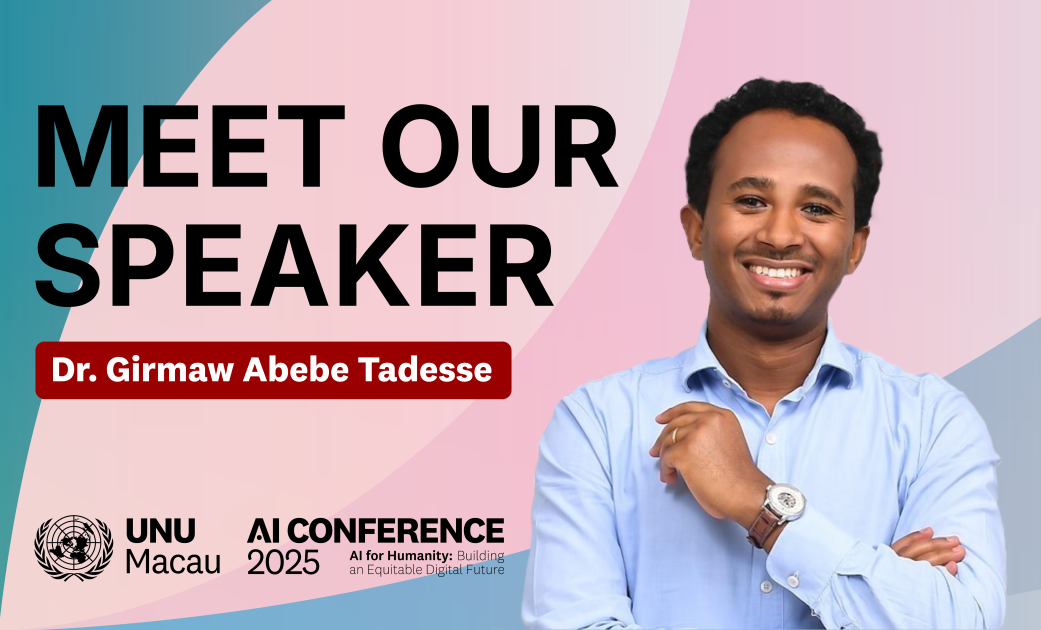
The United Nations has moved to appoint Ethiopian artificial intelligence expert Girmaw Abebe Tadesse to its newly created Independent International Scientific Panel on Artificial Intelligence, positioning Ethiopia within the world’s first global scientific body dedicated exclusively to AI governance.
In a formal note circulated to the UN General Assembly on February 3, 2026, António Guterres, Secretary-General of the United Nations, recommended a slate of 40 experts from across regions and disciplines to serve on the panel for a three-year term. Girmaw is the sole Ethiopian among the nominees and joins leading researchers and policy specialists from countries including Canada, France, Belgium, Mexico, Senegal, Egypt, and Finland—reflecting the UN’s emphasis on geographic balance and multidisciplinary expertise.
A New Pillar of Global AI Governance
The panel was established under General Assembly resolution 79/325 as part of the Global Digital Compact, adopted at the Summit of the Future. Its mandate is to deliver independent, evidence-based assessments on artificial intelligence—evaluating opportunities, systemic risks, and societal impacts—to inform global policy debates and strengthen international cooperation at a moment when AI is reshaping economies, labor markets, healthcare systems, and public services.
Unlike regulatory bodies, the panel’s role is advisory and scientific: synthesizing frontier research, identifying emerging risks, and translating complex technical developments into policy-relevant guidance accessible to governments and multilateral institutions.
From Global Research Labs to Global Policy
Girmaw currently serves as Principal Research Scientist and Manager at Microsoft’s AI for Good Research Lab, where his work focuses on deploying AI for social impact. He previously held senior research roles at IBM Research and conducted post-doctoral research at the University of Oxford.
Over the past decade, his collaborations with institutions such as Harvard, Stanford, and Oxford have helped advance AI applications in global health, particularly in low-resource settings. His research spans AI-driven diagnosis of infectious and cardiovascular diseases, clinical decision-support systems, and patient-care optimization where specialist access is limited. He is also recognized for pioneering work in wearable camera systems and multimodal data fusion, integrating video, audio, and sensor data to improve human-activity recognition—technologies with implications for healthcare, public safety, and assistive systems.
Why the Appointment Matters
The creation of the panel reflects growing concern within the UN system that AI’s rapid diffusion could widen global inequalities if governance frameworks lag behind technological progress. During the panel’s open call in 2025, Secretary-General Guterres warned against a future divided between AI “haves” and “have-nots,” urging inclusive approaches that align innovation with the Sustainable Development Goals.
Girmaw’s appointment underscores the UN’s intent to anchor AI governance in diverse lived realities, including perspectives from the Global South, where AI’s promise—improving health outcomes, expanding access to services, and accelerating development—coexists with risks related to data gaps, infrastructure constraints, and unequal access.
As the panel begins its work, it is expected to become a central reference point for global norms on artificial intelligence, shaping how governments and international bodies navigate one of the most consequential technologies of the 21st century.

About Addis Insight
Addis Insight is Ethiopia’s fastest growing digital news platform, providing consumers with the latest news from Ethiopia and its diaspora. We provide marketers with innovative opportunities to leverage our stories and overall brand with a fiercely curious and highly engaged audience.